 Laura
I’m fine. I’m lucky. I have nothing to worry about. So why does my brain sometimes tell me a different story? The internal, eternal critic wakes up and rips my daily decisions to shreds. More precisely with me, it throws up too many decisions and then mocks my inability to choose.
I’ve been posting a thread of images on Instagram, Facebook and Twitter for a while now that feature the hashtag #LostDoorsAndWindows. Living and walking around Venice it is impossible for me not to notice these strange ghost entrances to numerous buildings across the city. A friend asked me why there are so many and I stopped to think about it. My answer was that the buildings are incredibly old and have been repeatedly modified over their hundreds of years existence. Indeed, I have encountered literal labyrinths of complexity when trying to find a particular property within a property. Another friend told me the other day, that they found a walled up doorway inside their apartment that led to a secret cache of 19th Century weapons. A third found a historic fescol on her ceiling, underneath a layer of modern or maybe not so modern plaster.
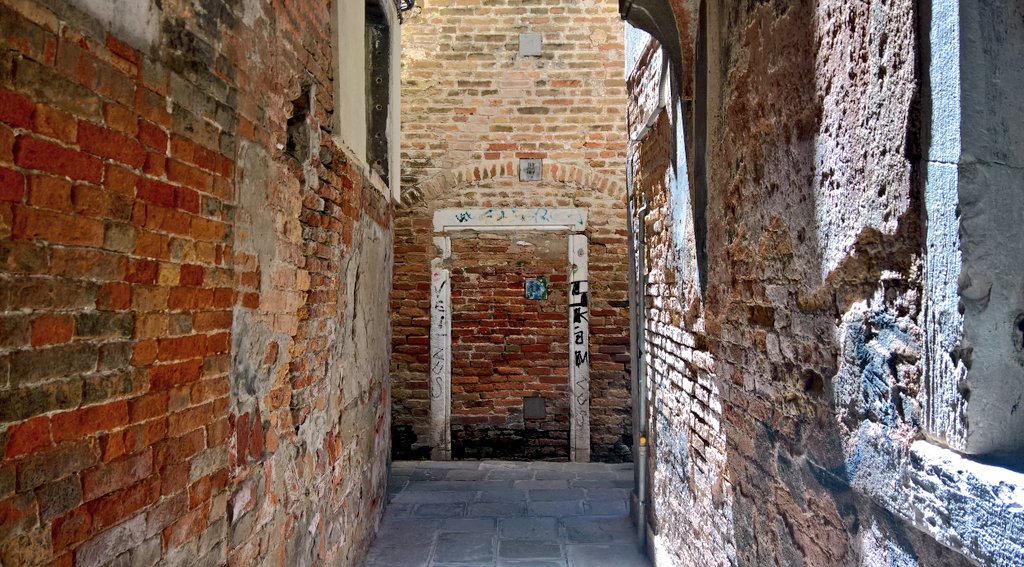
Last year, when I was walking the city whilst still experiencing symptoms of anxiety that had been plaguing me since the start of the menopause, I started to think of Venice as a metaphor for the brain. It could even be imagined to be sort of brain shaped. There are these different ways of experiencing the city – superficially through the highlights as a tourist, at street level as a resident and then this deeper connection when you take to the water. Without a boat, the bridges are the only way to get from island to island without taking the Vaporetti buses and both limit the routes you can take. There are all sorts of hidden or obscured activities around the city whilst at the same time events and entertainments are splashed right at your feet as you walk along a narrow calle and encounter a new venue.
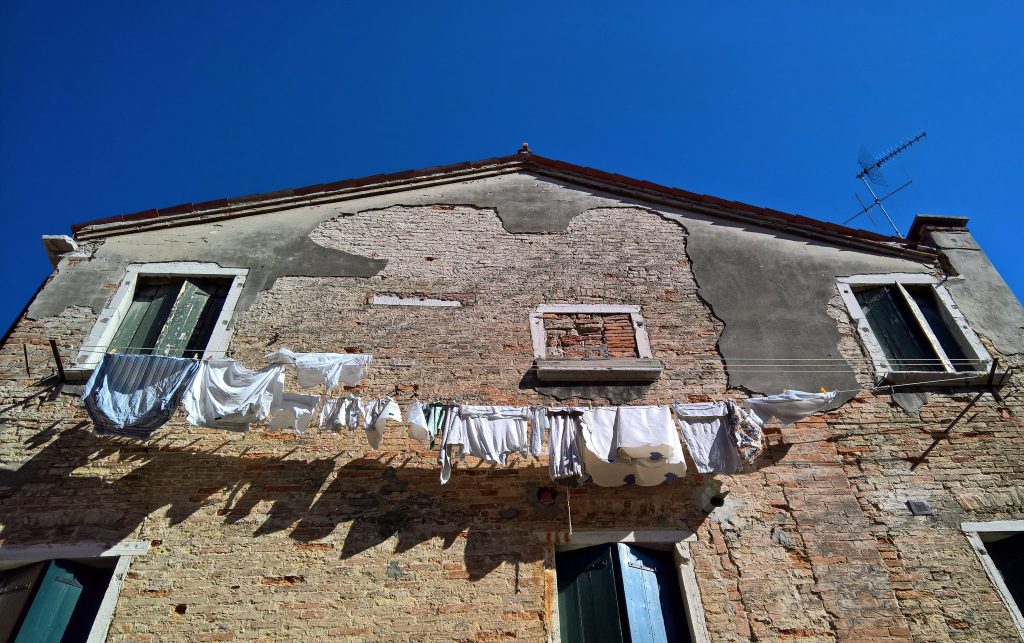
All of these experiences and observations feel like they have parallels in how our minds work and relate to the wider world. As I was thinking about #LostDoorsAndWindows it crossed my mind that they could be part of this metaphor. Buildings in Venice are incredibly overengineered and as solid as the artificial rock foundations that was created by hammering numerous logs into the swamp mud below the city to create a platform of Istrian stone upon which to build. Those buildings are mainly constructed of brick and wood with more Istrian stone for lintels, posts and arches. They need protection from the weather however and particularly from the damage created by salt water. I recently had the lower half of the interior walls where I live re-plastered with a special lime plaster that repels the salt in some way. Most buildings in Venice that couldn’t afford marble cladding would have been covered in this plaster in the past but the city’s impoverished years since Napoleon’s invasion of 1797 have led to more and more buildings abandoning this process or not repeating it frequently enough. The plaster is a sacrificial coating but it needs to be renewed to stop the corrosion getting to the bricks. It also covers the up the alterations of the past. As the plaster falls away, the old bricked up openings are revealed.
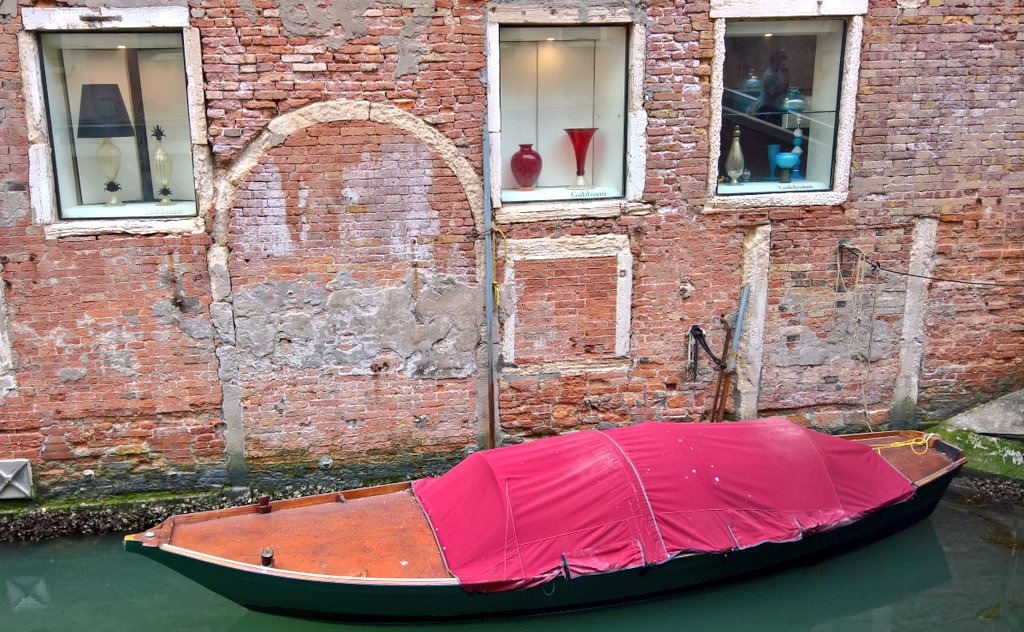
We cover up stories from our past. We brick up entrances to narratives we’d rather forget or keep hidden. We don’t all have a metaphorical stash of hidden weapons (probably hidden after the reunification of Italy in the late 19th Century when they were no longer needed but still considered to be of importance) but we have rooms of memories that are no longer relevant to our lives. I think it’s natural for the brain to wall up some of our life experiences. We forget for a reason and the known cases of people who can’t highlight how incredibly painful an existence this can be. Some memories just end up down narrow calli that we rarely visit anymore. There is no reason to go there. Some memories are bricked and plastered as whole buildings in the brain are reconfigured to obliterate their original existence however. Sometimes we choose to pull the plaster off, to do some remodelling of the mind. Sometimes it get corroded by the salt of life and we see the ghost of an entrance to something that is in equal parts intriguing and terrifying. Why didn’t I know that was there? What is behind that door? What does that window look into or even out onto? Are we in fact sometimes walled up behind the brick instead of wandering the pathways and, if we’re lucky, canals and rios of our minds?
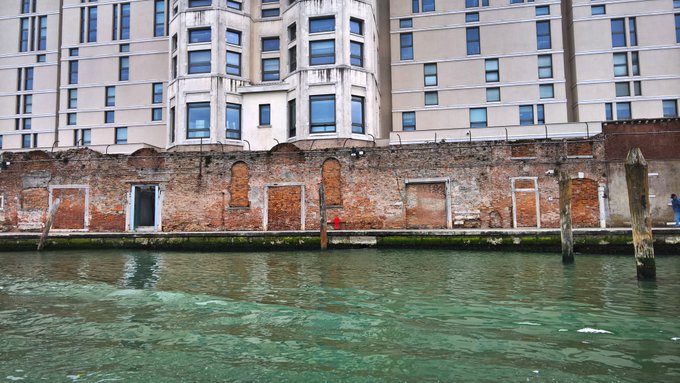
It is my belief that creative people, which is most of us to be fair, are endlessly curious. We want to explore a narrative, reshape a material, understand what happens when we transform an image, an object or a line of dialogue. We want to find the lost doorways and windows of our own and other people’s lives and see what lives there. Venice was once overflowing with people – as many as 200,000 in the pre-plague 1600’s for an area little more than twice the size of New York’s Central Park. There has clearly been a constant land grab over the 1600 years of it’s existence. The biggest loss is probably the (shady in summer, dry in winter) porticos that must have once featured along numerous streets based on the lost archways that are being revealed citywide. The city is now perilously empty however with a permanent population estimated to be as low as 35,000. The locals are passionate about their city but it sometimes feels like they don’t want to open up its hidden portals. Could the local creative community be the answer to sustainably support this unique place into the future. Embracing the dark secrets, the alchemical knowledge that has sustained the city for so many centuries already and translating it into an open book for everyone to read.
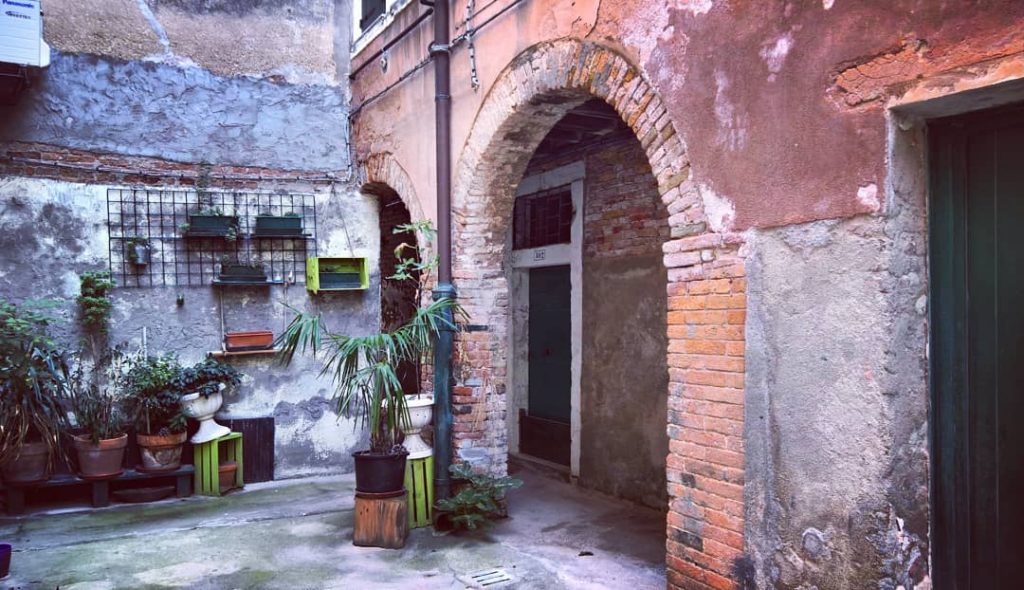
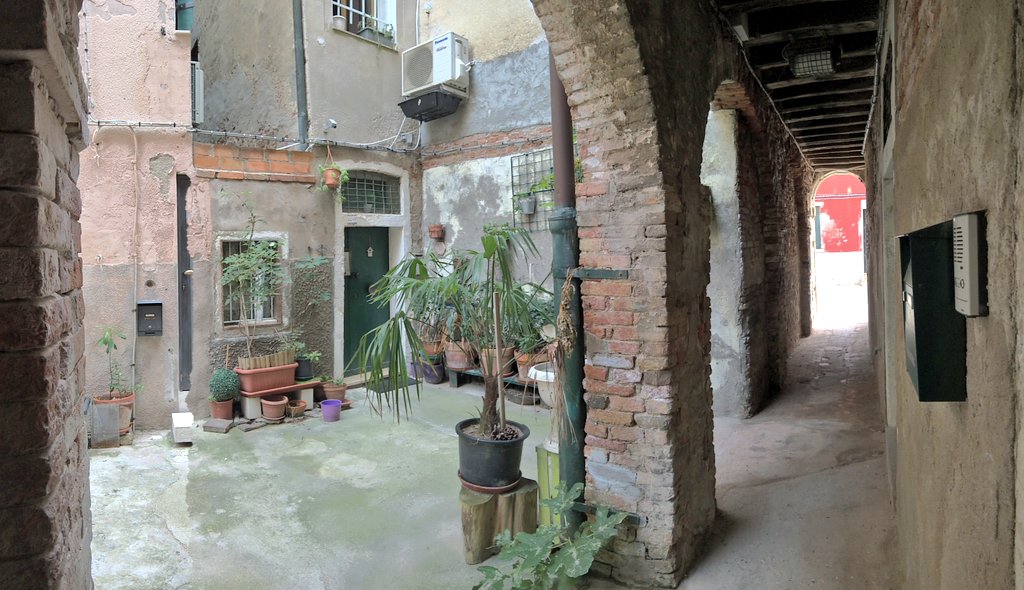
I look closely at the bricks, the lintels, the crumbling jesso. I delve into the lost spaces of my mind. I puzzle at the timidity with which I loosen a brick whilst also wonder, wide eyed at a new passageway that takes me from say the guilt of laziness to the remembrance of a mother who sometimes struggled to get out of bed. Our minds change and become repurposed. Sometimes they empty out and feel like their function has failed. We can recognise that the foundations are solid and still worry about the wind driven salty water that corrodes and stings. The stimulation that comes from exploration, change and understanding a new form is worth the risk of uncovering a ghost of two. I just have to choose which one.
