 Laura
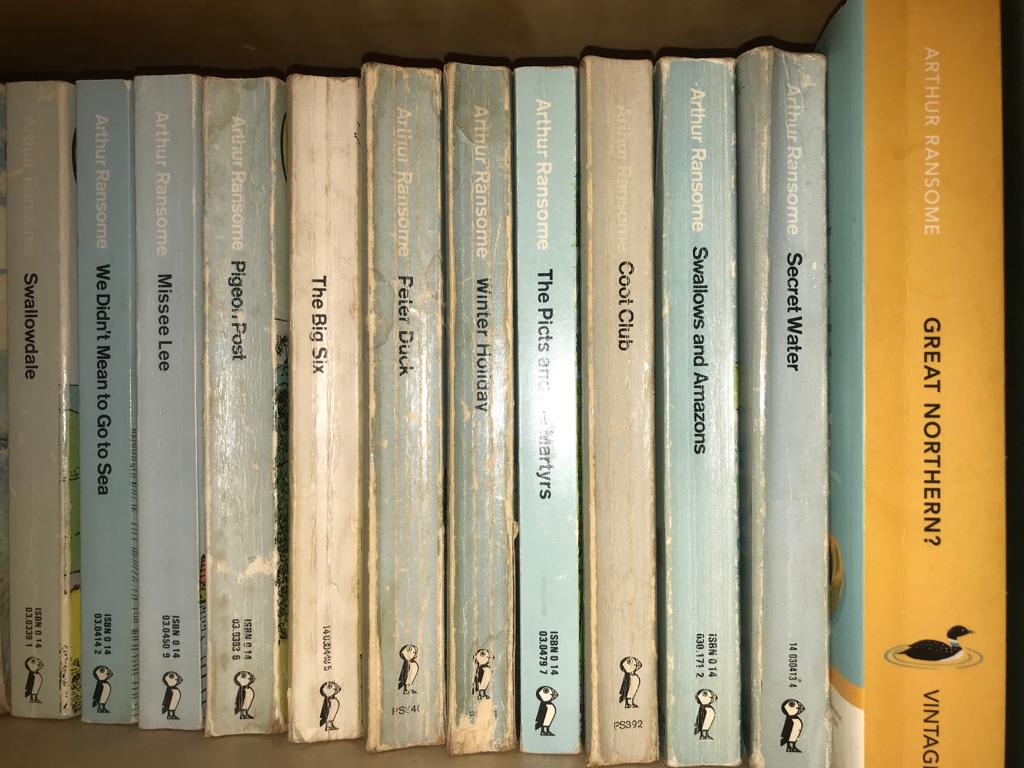
When I was a child, my favourite books were the Swallows and Amazons series by Arthur Ransome: a series of 12 books which all feature sailing, kids and a level of independence and adventure of which I could only dream. I first read the books in the 1970’s, when I was a similar age to the children featured – a time looked back upon as halcyon, in terms of childish freedoms, by today’s commentators. My ability to roam free around much of the village and surrounding countryside I grew up in was nothing in comparison to the adventures of the children in the books however. They were set between two world wars but could also be defined as a time when telegrams were the What’s App of the day – unless of course you used Pidgeon Post*.
As alluded to, I grew up in an English country village. Not particularly small but rather beautiful and within reach of London if you wanted to go cosmopolitan which my mother often did, much to my benefit in later life. The fields were patchwork. There was a bluebell wood up the lane and over the motorway bridge. There was cricket on the common, so good that, in 2020, the team got to Lords, the home of Cricket with a capital C, as part of a village national championship. But there was also nowhere to sail, famously being about as far away from the sea as you can get, in the UK. In fact there was a place not so very far away by car but we were a large, not hugely affluent family so the experiences my father had when younger, lake sailing in dinghies, weren’t replicated in my generation. Maybe if I had ever made it clear how desperately I wanted to learn, my dad might have found a way. Other activities took precedence however and we were more an ‘arts’ family than a sporty one.
In the forty or so years since then I have succeeded in learning a little bit about sailing and experienced some truly wonderful times on the water. Without actively pursuing my secret dream I’ve slowly but surely manufactured or cajoled opportunities out of the thin pickings available. Then I decide to have a bit of a midlife crisis, develop quite severe anxiety, pain to the point of fibromyalgia and, not surprisingly, a total loss of purpose and meaning. A moment of true kindness by my cousin relocates me to within 10 miles or so of the South Coast. I briefly wonder about moving that bit further to the Isle of Wight – one of the most famous locations in the world for sailing but also a varied and stunning environment which couldn’t be more different than the hectic, seemingly now too aggressive London in which I have passed the previous thirty years. It also has history as the place, in the time of Swallows and Amazons, to which my great grandfather and various members of his family emigrated.

Due to my anxiety, this idea feels beyond me but suddenly, when I read about a course to learn wooden boat building in Portsmouth, namely the IBTC Boat Building College at the Historic Dockyard, something feels just possible. Strange that an activity that most people wouldn’t even consider and a tiny (to the point of statistically non-existent) number of people in the world have ever done should be the thing that gives me a new lease of life. My experiences on that course are for another time but definitely one of the motivators for deciding to do it is that I hope that I’ll get to do more sailing. The other motivator, I realise when I get there and particularly when I move into an apartment where my bedroom has a view of the sea, is to live by water. I suspect Swallows and Amazons weren’t the only books I read, in my formative years, that engendered this desire.
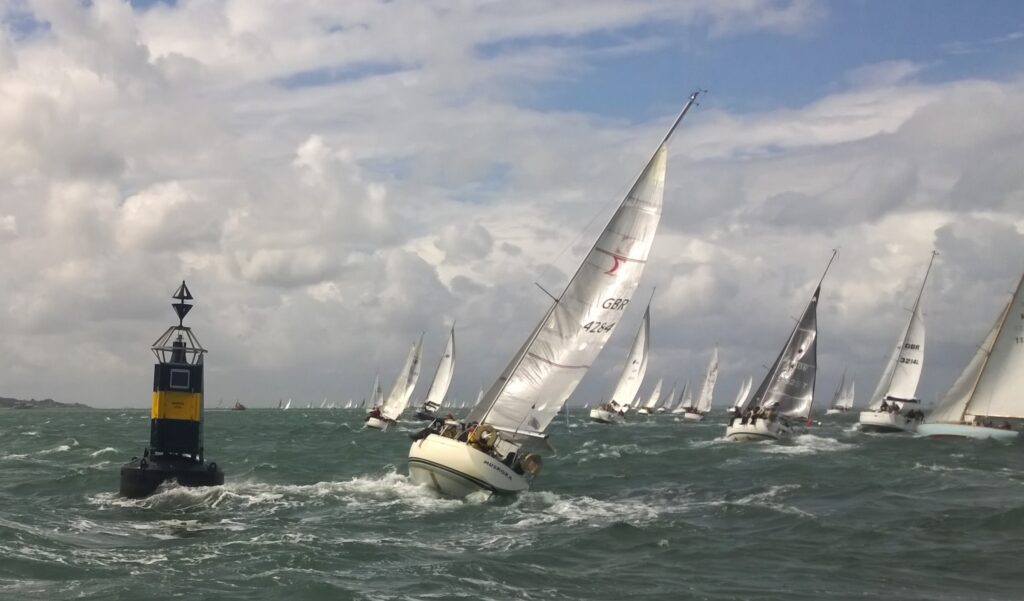
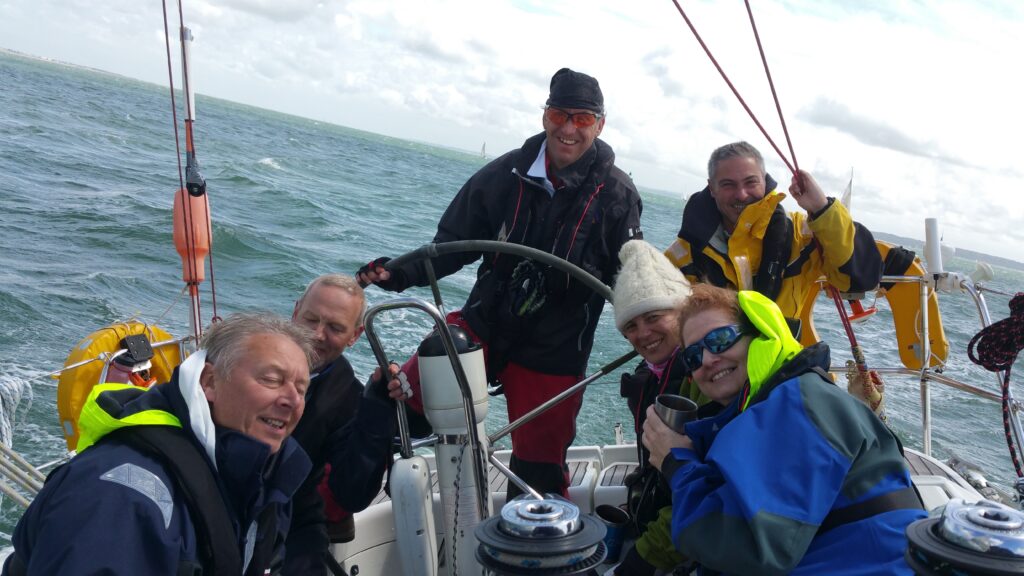
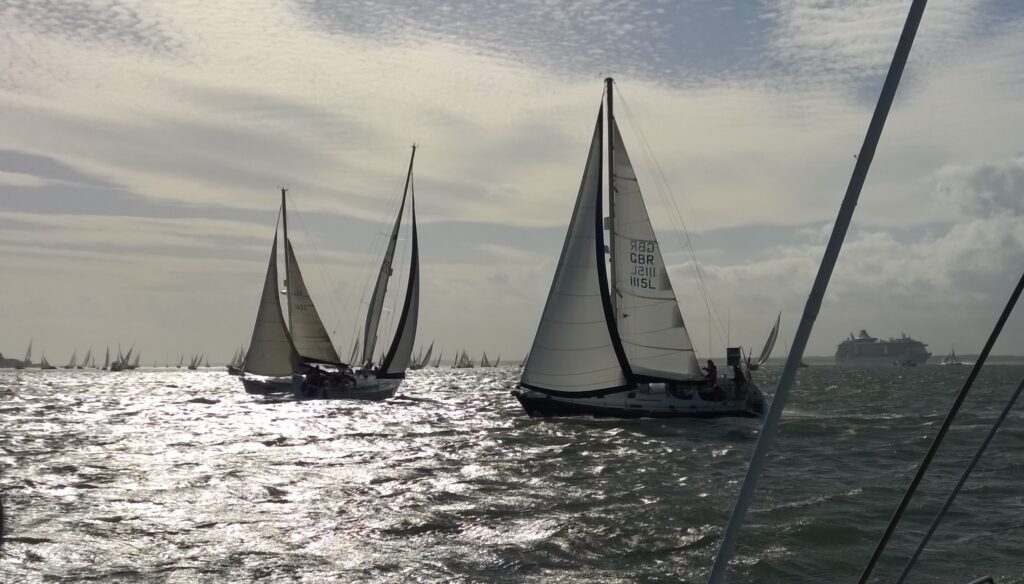
Thanks to the generosity of a couple of my friends on the course and that of my nearby brother in law in law (yes, you read that right), I finally follow up the competent crew course and Round The Island Race ‘holidays’ I’d undertaken in the area with some proper social sailing. The boats are live aboard size, modern, keeled plastic boats. Wooden boat people can’t help calling fibreglass or, more correctly, glass reinforced plastic boats by just the plastic bit of their name. However, putting aside their eco credentials, there’s nothing wrong with this kind of boat. When sailing with wonderfully capable captains, they’re a great way to experience the joy of sailing and even learn a lot of the (enormous amount of) skills needed to sail well, safely and with confidence. To be fair, the Solent is also the place to do all this – busiest stretch of water in the world with utterly fiendish tides and a South West prevailing wind that can whip up white horses out of nowhere if don’t keep an eye out.
What I’m not doing however is messing about in dinghies. There’s a good reason for this. Small boat sailing isn’t for the feint hearted and even more so around the coastal waters of the UK. Surprisingly for someone who always wanted to learn to sail, I don’t particularly like getting cold and wet. And I’ve never been great at just signing up to a club for anything. In fact I think the first club I’ve ever been a member of is my local rowing club, here in Venice. This is another long story about my journey from the heart of the British Navy to the heart of the Venetian one – living right next to the most famous industrial boat building complex of them all, the Arsenale.
In the last three years I’ve made my home in the Serenissima and I am quite literally now living on water – a fact all the more acutely evident in the first year of my residence and the infamous acqua grande of 12th November 2019. The apartment I move into, six weeks later, is submerged in the tidal waters of that stormy lagoon night. Nope I don’t like being cold and wet and most of Venice was just that, that night.
Last year I bought one of the Swallows and Amazons books for the dear friend here who found for me my precious little and now dry again apartment. It’s hard to decide which book to get. They’re all excellent. I chose Coot Club* because it’s set in an environment not dissimilar to the Venetian Lagoon, the Norfolk Broads. He loves all things English and I think this little slice of waterways and water birds will be suitably appealing. There is also the subject of the Hullabaloos – motorboat holiday makers who have no regard for the sensitive ecology of their environment, a part of the plot which feels impossible to have been written 88 years ago considering how current it is for today’s Venetians. My friend owns a motor boat himself but would never behave like a hullabaloo because he is also a Venetian and if there’s one thing the Venetians hate it’s moto ondoso. We don’t have a good translation because ‘wave motion’ doesn’t do it justice. Let’s just call it the artificial choppy, disturbed, erosion inducing, rowboat upending lagoon water state caused by the wakes of boats with far too large engines going far to fast in shallow water.
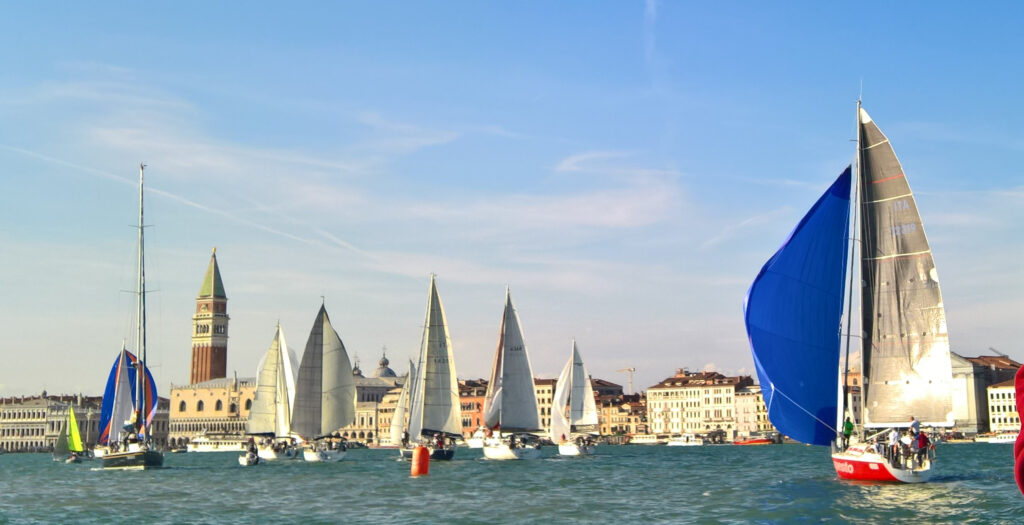
This last weekend, I finally go sailing in the lagoon. No that’s not quite true. I had the great pleasure of sailing into the Bacino San Marco and past the Doge’s Palace in October 2019 with an Irish/Scottish couple who took part in a regatta for modern boats and accepted me as rather rusty crew for the day. But there is a type of sailing here that is basically time travel. Gloriously, magically Swallows and Amazons style dinghy sailing. Let me say, I am a rower. A Venetian style rower. Thanks to even more wonderful friends here, I have the extreme privilege of spending a reasonable amount of time during a world wide pandemic learning to row – standing up and facing forward. It’s about as safe an activity that you can do while a respiratory infection is spreading – you’re outside and metres apart. You’re keeping fit. And you’re taking in all the awesome beauty, variety and fragility of the lagoon environment that surrounds and intermingles with the city itself.
But oh how I’ve longed to sail in a Barca Vela Al Terzo.
I am a rower. I can (very nearly) control a rowing boat in a large number of conditions. I doubt I’ll ever be a sailor. There are just too many variables to learn, many of which have very serious consequences. But I can crew. I can be Roger, sitting at the front of the boat, holding the jib rope. Or Titty, my wonderful imaginative favourite, conjuring up tales of pirates and explorers and drawing maps to represent their worlds. I can bring grog and pemican like Susan. And if I’m really lucky I can hold the mainsheet for a bit whilst being John trying to not make any wobbles in the rudder’s wake. Pronti di verata? Ready to tack? What a great cry to ring out across the waters of this inner sea.
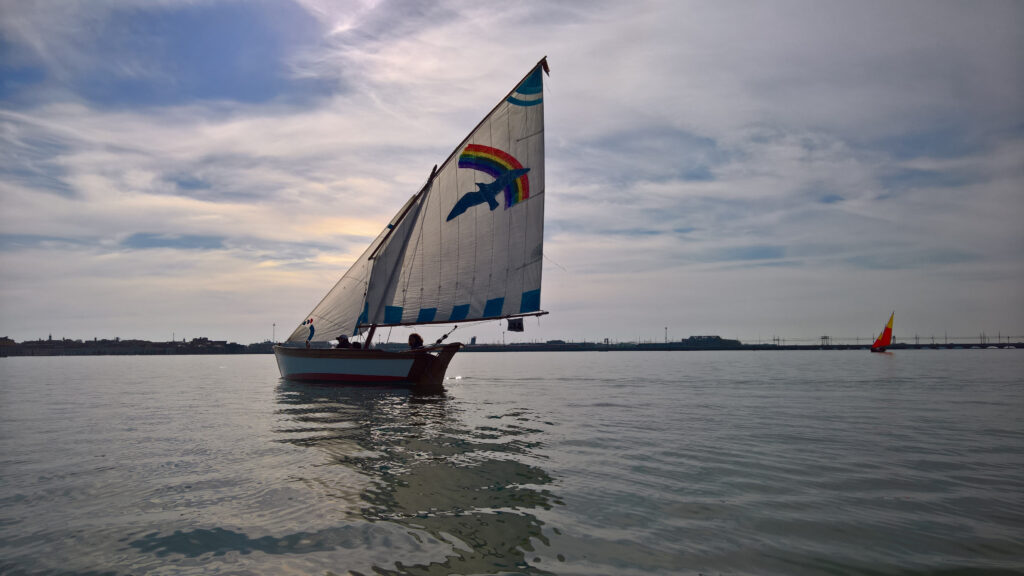
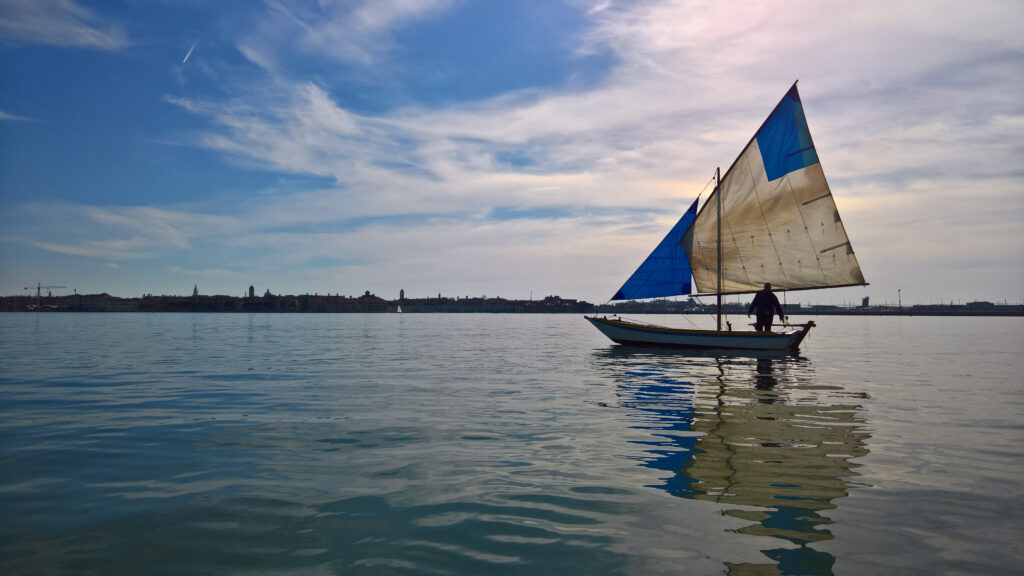
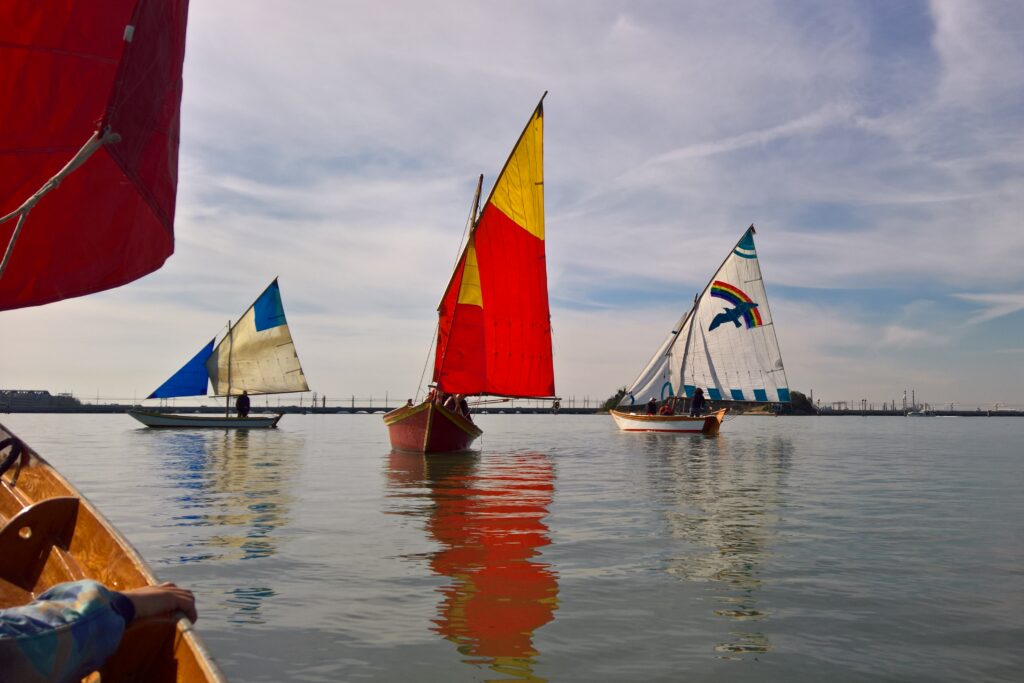
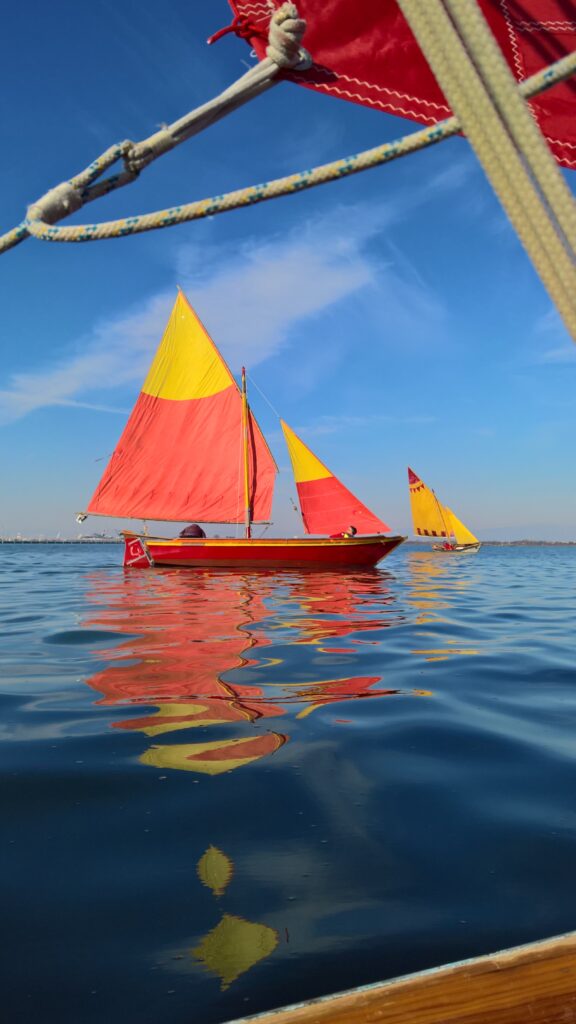
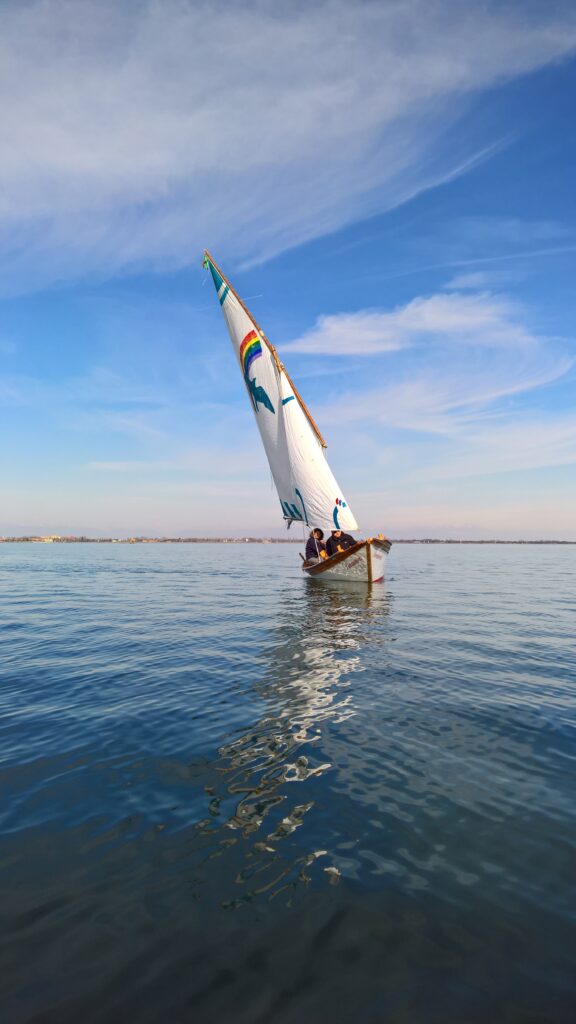
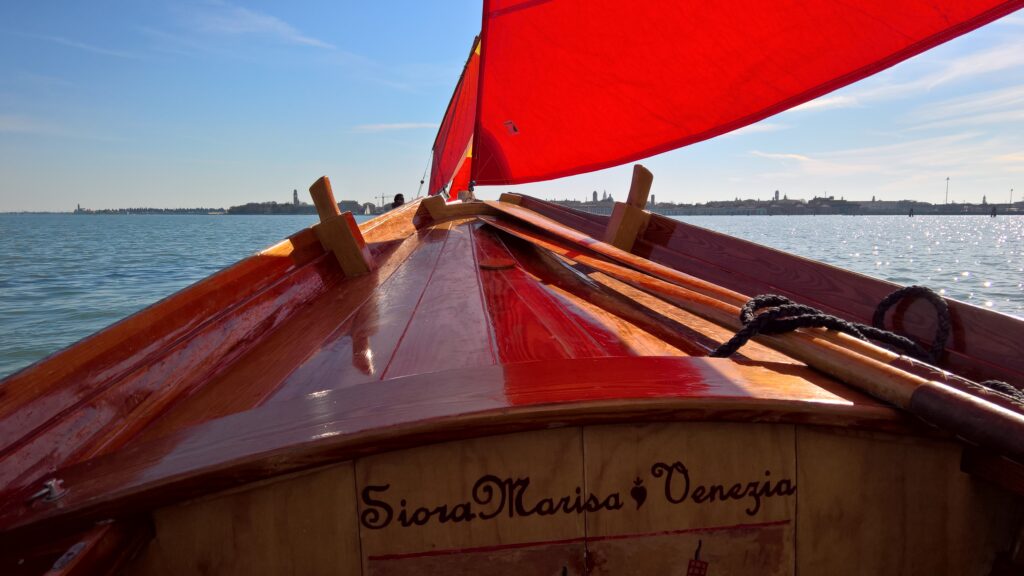
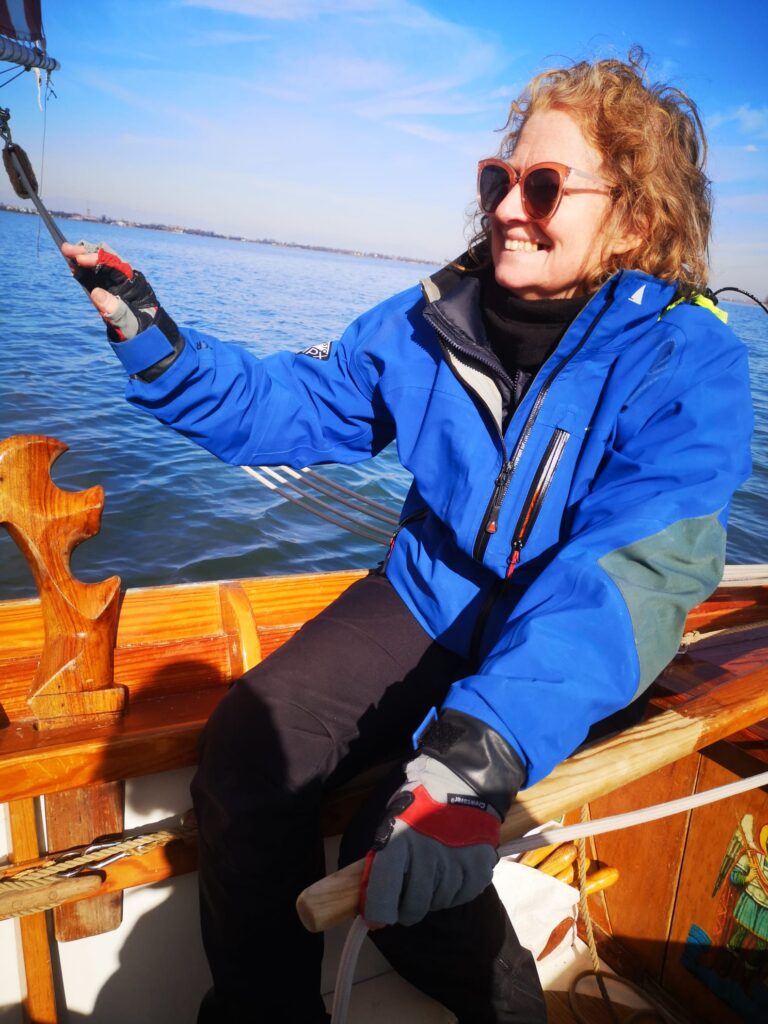
When you row, you expect the floor of these shallow boats to remain largely horizontal, even with a bit of moto ondoso. Not so when sailing. Suddenly, the stable rowing boat I know as a San Pierota is up on it’s side, using the chine or corner between it’s flat bottom and side planking as an effective keel. I rapidly re-remember how to brace myself against something immovable and avoid sitting on ropes that need to run free. What joy. We are racing and our masterful skipper employs all the best tactics of claiming water or, as he bellows it, ACQUA.
One day, last Autumn, my friend Robin and I decide to go mad, get up early and row out into the lagoon to watch and support our friend Jane in the one person/two oars race known as the Valesana to San Giuliano on Terra Firma. We’re only at the beginning of being confident enough to go out on our own like this but the morning is millpond still and quickly becomes bone warmingly sunny. While we wait anxiously for the race to pass – anxious because we’re not sure if we’re in the right place – a vision in yellow sails glides past. I shout something like ‘COMPLIMENTI’ and the lady at the tiller shouts back, in English of course, ‘you can do this too, if you want!’. ‘HOW!!!’ I immediately reply. ‘Ester. Facebook,’ she replies. I find Facebook impossible to find anything but I keep persevering and after numerous false starts, I’m finally meeting this lovely lady by a petrol station on the road into Mestre and she’s whisking us round to the sailing club.
All the people I meet from the Associazione Canottieri Mestre are utterly delightful. Their boats are as beautiful up close as they are from across the water. It is fascinating, really fascinating, to see all the parts I tried to learn how to build, during my boat building course. As a side note, there were a couple of us on the course who couldn’t understand how you could not want to sail if you wanted to build a boat and indeed that one would surely inform the other. The really beautiful thing about Vela Al Terzo in a tradional San Pierota however is that, minus the centre boat and the clinker style, overlapping planking, everything about these boats is Swallow or Amazon or Scarab or Teasel-like.
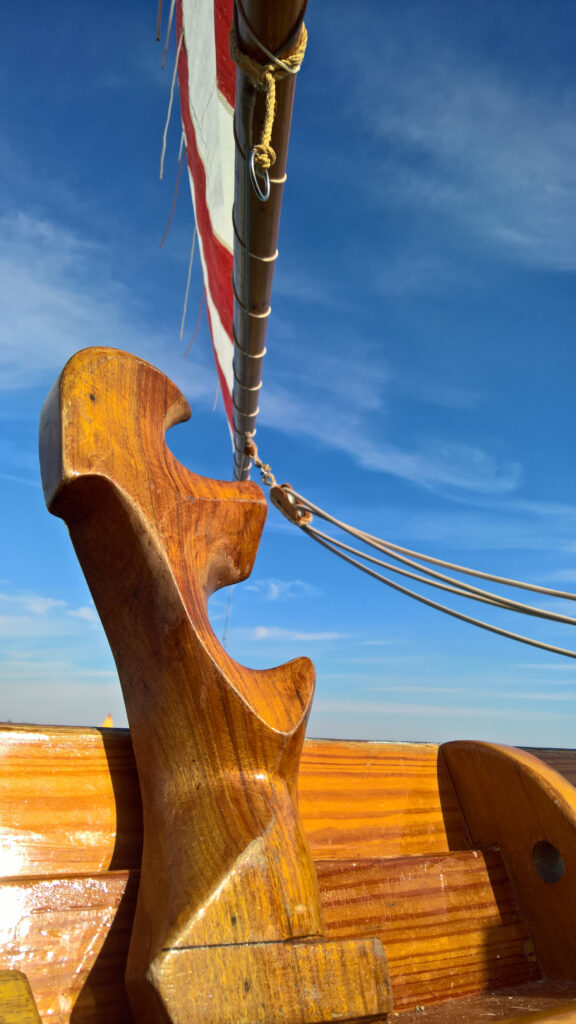
OK, if you’re being precise all of these boats from Ransome’s books are different from each other but I’m pretty certain Swallow’s rudder could also be removed as easily as in these San Pierotas or a Topo di Chiogga or a little sailing Sandolo. Significantly the boat I’m sailing in has a lug sail or ‘sail in the third’ as I roughly translate it from the Italian. This means there are two spars – a bottom boom and a top yard – with a trapezial shaped sail stretched between the two. Other things which seem to be similar are the sail being laced to the spars and the mast having no stays – the ropes or wires that hold the mast on a modern boat in place. Instead, the foot of the mast is jammed into a mast step, it’s angle adjusted with tiny wedges. When the top yard is raised, the rope that lifts it, known as a halyard, is lashed to the thwart. Can I just say that I love this word for the piece of wood that sits across the middle of the boat and does so much work bracing and creating the shape of a small vessel like this. In Italian it’s called a trasto. When I look up a translation for thwart, I get contrastare. I wonder if the word got lost in translation somewhere.
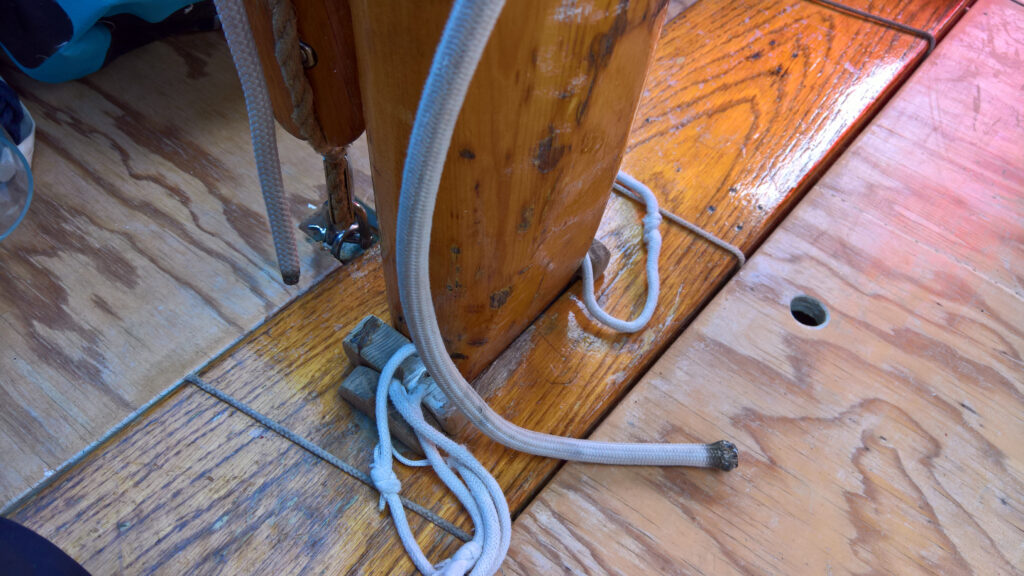
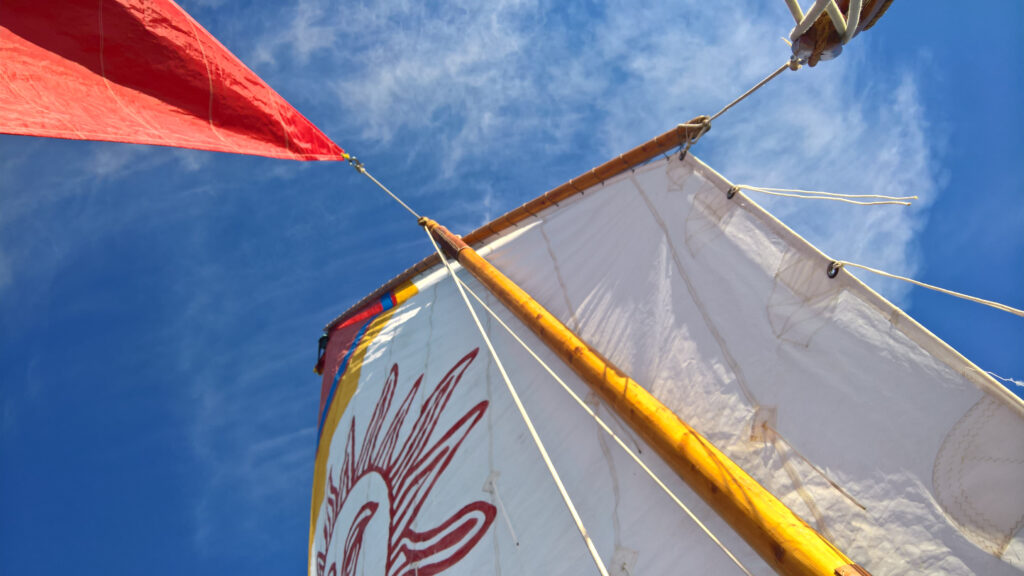
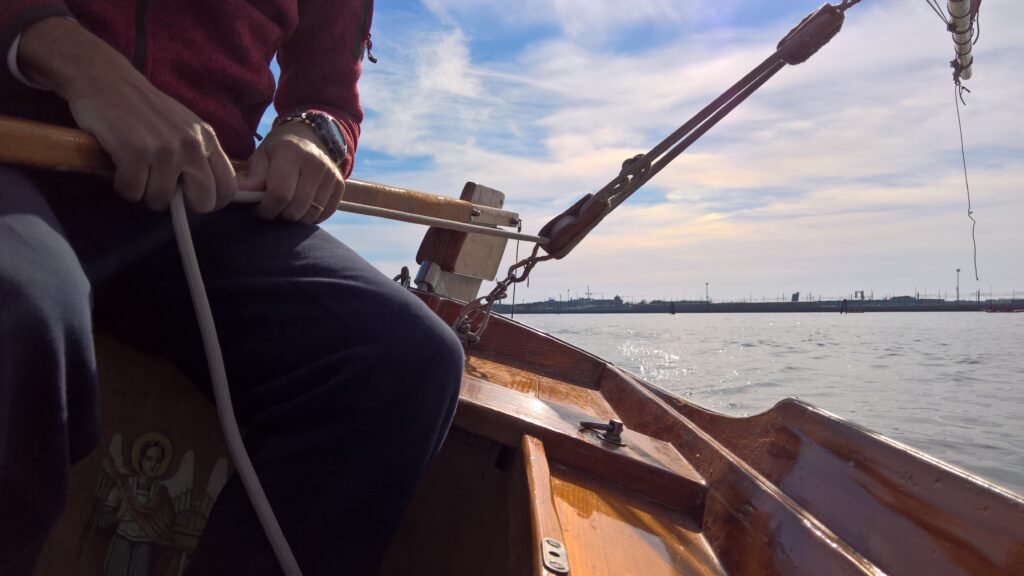
Yes I’ve become all jargony but that is the nature of sailing and boats. It is another whole language even if our own vocabulary is utterly infused with the terms without knowing it. Give me some leeway, OK? The names of the Venetian boats were also all a mystery to me and impossible to say, let alone remember, but now I understand (nearly all) of their shapes and many of the reasons for their differences. Nothing however will quite beat watching a huge (to me) boom swing out impossibly beyond the side of our boat only to miss the oncoming boat by millimetres as Alessandro calls out, once again, that he has water and that he should indeed be given leeway – space on the lee side.
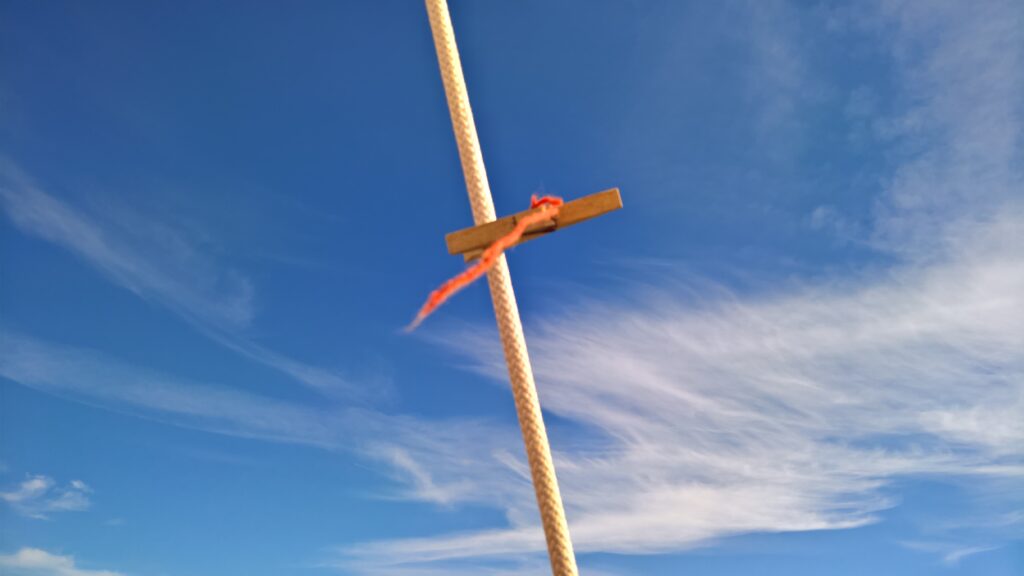
I am a rower but my blood sings at the colours of the sails on the increasingly pondlike and shallowing lagoon whilst gazing delightfully at a fluttering telltale thread clipped to the halyard and signalling the direction of the breeze. Except it’s not doing much fluttering any more. Hang on, what’s happening over there? Someone is sailing AND rowing. Bliss. I can row in a sail boat. The crew of Swallow also used to row her when the wind dropped or it wasn’t necessary to rig the sails. In fact it is necessary to row to get back to the remiera (or boathouse) so I standing up and facing front, I’m suddenly back in my element.
I have a really bad time getting up in the morning. The reasons are manifold. This morning, as usual it’s a painful struggle to get myself vertical. Today it’s also much earlier than normal so that I can get to my meeting point with Ester, across the other side of the lagoon, on time. I have been wondering about this sailing lark as I can tell it will always be an early morning thing and I just don’t know if I can do that regularly. By the end of the morning however, I cannot begin to fathom the bliss of this day and I’m grateful that I found the energy. I thought my Venetian rowing adventures couldn’t be topped and, in many ways, nothing will beat that voyage of discovery or the wonderful people with which I spend time, on that route. But this is the fulfilment of a lifetime dream. And it fulfils that dream in every way imaginable. Who knew it would happen in the Serenissima.
*Pidgeon Post is a way to send messages but it is more importantly one of the Swallows and Amazons books. Coot Club is linked to the Lake District-set books by the characters of Dick and Dorothea Callum and there are other ‘gangs’ of sailing kids that populate Secret Water and The Big Six. But at the heart of the most famous stories such as Swallows and Amazons itself, Swallowdale, Winter Holiday, We Didn’t Mean To Go To Sea, The Picts and The Martyrs, Peter Duck, Missee Lee and possibly my personal favourite Great Northern, it’s John, Susan, Titty and Roger Walker, Nancy and Peggy Blackett and their uncle, Captain Flint. Not forgetting the parrot and the monkey of course.
