 Laura
The woman reflexively shrinks away from me. Even though we are all sitting two seats apart, wearing masks and have just had our temperatures taken. Sometimes the paura is just too strong. Paura is the Italian word for fear. It’s quite a dynamic word because you start with POW and then transition into UURA. I hear it regularly along with covid which is pronounced with the O you hear in cot rather than the one I use, in coat.
I have accreditation to the Venice Film Festival this year. The idea was that I might find some editing/reading work but in reality it was an opportunity, when I booked in late June, to look forward to something relatively normal. As normal as the phenomenon that is the oldest Film Festival in the world can be, that is. Up to the start of the festival, the organisation seemed to be incredibly chaotic, even down to the temporary structures still being built the day before opening and there being hardly any information available about the actual films being screened. I still haven’t received my password to the trade online section.
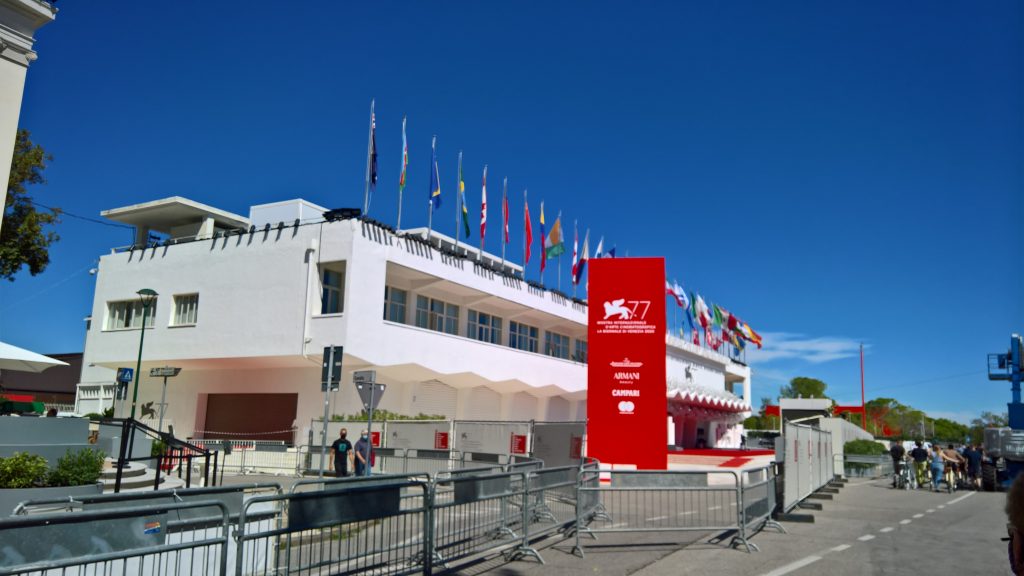
Once things get going however, I can only commend the organisation and in particular the army of young workers who do everything from taking those temperatures, guiding latecomers patiently to their seats, directing lost people like me around the site and, as I notice only as the festival is coming to a close, swarming into each venue after a screening to disinfect all the surfaces. The organisers are taking no chances but they should be indebted to their workforce for making it all work so amenably. I hope they’re getting a good wage.
By the end of today I will have seen 24 films. Most of them are not films I would have had the chance to see otherwise. The longest is Robert Wiseman’s City Hall at a back busting four and a half hours. As my friend, Patty says, you need a culo di ferro for that. The most emotional is one of the earliest, Quo Vadis, Aida, which tells the story of a woman translator working for the UN forces as the Srebrenica massacre of 1995 plays out inexorably in front of her. The most important film for me but also the most adept and satisfying on every level is The Best Is Yet To Come that relates the scandal of Hepatitis B carriers in China in the first 15 years or so of the new millennium as they suffer from a level of discrimination that leads to almost complete exclusion from society.
Most of the films in the festival have been overwhelmed by the events of 2020. This doesn’t make them less relevant but Wang Jing’s The Best Is Yet To Come is prescient on every level. The extent to which the broader society across China, because of ignorance and consequent fear, penalises those infected who are, never the less, of little danger to anyone else, seems frighteningly portentous. (The condition affects 100 million people of a population of 1.3 billion by the end of 2003 when the film is set.) After another film, I talk to a 17 year old girl about the bravery needed to publicly hug another person right now and it shocks me that we even use these terms about something so essential to our mental and indeed physical wellbeing.
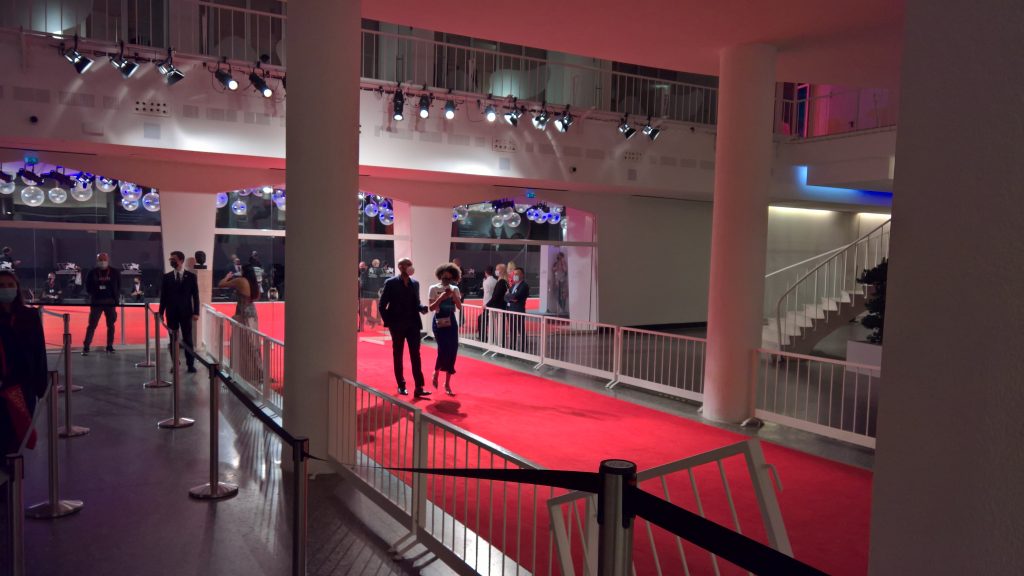
I don’t have much physical interaction with others. It’s not through choice although the choices I have made in life have made it thus. One of the saddest memories I have is trying to get my mother, who was in the advanced stages of dementia, to put her arm around me and keep it there for more than about five seconds. I sniff at PDA’s or public displays of affection, muttering to myself, get a room. But I recognise that this isn’t the natural state of affairs and I value the intimate moments I do have. More and more studies talk about the dangers of lack of physical touch in child development. The connections we make that are more than casual remain with us long after the actual event has flowed into the past.
The second most important activity we have been instructed to undertake during the emergence and development of this new respiratory virus, after washing our hands and not touching our faces, is maintain physical distance from one another. This has proved to be incredibly difficult for many sections of society, particularly those that provide essential services for the rest of us. In the home, an infected person is supposed to quarantine from the rest of the family but indeed this still doesn’t stop the likelihood that, once a household has this or any other virus, it won’t pass to everyone in that home. Whilst this could be devasting if there is a vulnerable person in the house, it also means that this small community is now free to hug, to caress, to get up close and personal and ironically to do that anywhere else they want, outside the home.
Another favourite island of mine, the Isle of Wight, is serviced by a variety of ferries and the only commercially running hovercraft service in the world. I get emails from Hovertravel and their reaction to the new world order they found themselves in has been exemplary, particularly committing to providing extra transit services for the medical needs of the island over the early part of the epidemic. Their most recent email really impacted me however since they clearly felt it necessary to explain that the staff make a point of seating family and social groups together. This is to enable them to maximise the capacity of the service but it also makes sense. Why would you put a small child two seats away from its parent for any trip on public transport?
Here in Venice, they long ago removed the stickers that forbade you from sitting on every seat of a vaporetto. They never really had much signage or enforcement of the idea of remaining one meter apart (as the regulation has always been here), particularly in the cabins that form the floating boat stops of the service. I’ve never particularly liked being crammed into someone’s armpit on the London Tube. Crowds that jam us together to the point of danger do engender fear probably for good reason. In other respects, we have heard from airlines and sports grounds, pubs and indeed, cinemas, that there is a capacity level to which businesses become financially unviable. We are basically being warned that our need for most of the communal activities of life, amongst which humans seem to thrive , require a degree of crowding that puts us at danger. If not from this virus from something else equally infectious. Is it because we don’t want to pay adequately for the services being provided so that they don’t need to overcrowd their premises and vehicles? Is that someone wants to make a greater profit by squeezing the margins, literally? Or is it that we normally don’t care about the risk and contend that our need or desire is much more important?
When you live on your own, are told it is dangerous to meet up with other people and repeatedly harangued that those who do meet up are putting you and your loved ones at risk, it is extraordinarily easy to reach the point where you jerk in disapproval at the mere sight of two or more people spending time together. When we couldn’t move further than 200m from our homes during the height of the lockdown in the Veneto region, I spotted three teenagers, a girl and two boys, hanging out on the bridge at the end of my calle. I was suitably sniffy in a very English way. Later I saw them on another corner and then, one day when I used the excuse of going to the cashpoint to walk along the Riva Sette Martiri, revelling in the view of an utterly still and extraordinarily empty Bacino San Marco, I saw them again. They were sitting on one of the stone benches. Even without the power of three, they were doing something wrong and were approached by the police to move on. No sitting on sun bleached stones. The thing is, I had to actively change the gears in my head that disapproved so violently and say to myself, these kids are always together. They don’t change groups. They don’t form bigger ones. At least they get out the house unlike the majority of the population and, in particular, the children. There is nothing remotely dangerous about their intimacy, for them or for me.
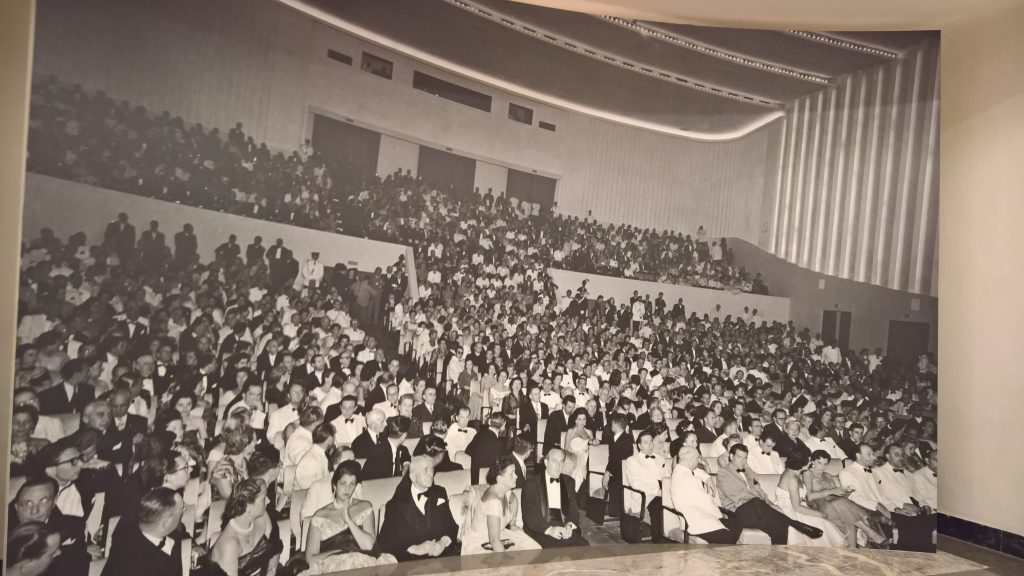
The Venice Film Festival decided to ameliorate their loss of capacity in putting everyone a seat apart by putting on more screenings. They also finally (apparently) upgraded their booking system to being fully online. As an accredited delegate, I could book exactly the seat I wanted and also cancel it so that someone else could use that place, at any time. What I couldn’t do was book for someone else so, to try to end up sitting in at least a vaguely similar place, we had to liaise precisely at the time of booking on our separate devices. It is possible through the public booking system to book more than one ticket at a time however but even here, two family members have to sit distantly from one another. In queues the instruction is repeated to stay a meter apart regardless of the nature of the groupings standing together. Early on in the festival, I and two friends are reprimanded that only two people can sit together at a café table (although this becomes harder and harder to enforce as the seats and tables are dragged around by people eager to meet and talk) The default instinct, repeatedly, is that we are all separate people, who must remain separate at all times.
Ironically everyone who enters the festival site must also go through the usual bag search and metal detector scan. In past years, fear of a terrorist or violent individual attacking visitors at such a famous event would have more than likely dominated the headlines at some point. I am pretty in the know about the (extremely low) risk to my health from Sars Cov 2 right now. I’d love to know what the actual risk is of encountering a knife wielding madman – other than on the big screen that is, of course.
One of the earliest instructions we all received as the social distancing (as it was called then) rules were instigated, was stay in touch with your loved ones. Particularly, we were admonished to not lose contact with those who lived on their own or were isolated for some reason. This suggests someone understands the risk of social isolation as much as respiratory illness. I often wonder however who the hell was issuing this advice. It displays a lack of awareness that being forgotten or irregularly contacted, when you live on your own, is the default position for most of us. To be fair, often it’s the choice as well. The socially active people looked to continue that social interaction while those of us who usually go down the list of engagement suddenly found ourselves with more online activities and interactions than we really knew what to do with. In fact, I find myself somewhere in the middle here. Cutting a long story short, I have spent the last three years choosing to go out, make contact, ask, without fear of rejection. I have learned that only I have the power to make meaningful connections for myself. It was nice for a while however not to have to be the instigator.
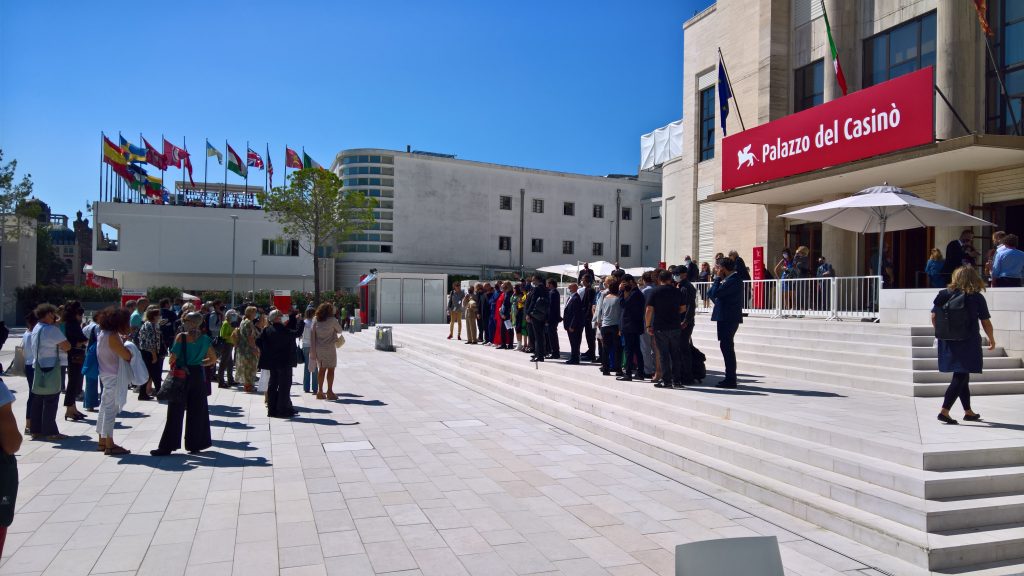
As the rules relax and more of us can get back to the normal rhythms of our lives, I hear people expressing a kind of sadness that the stillness of their incarceration and the level of connection they felt with their friends and family seems to be coming to an end. During glorious September weather – dark blue skies fading into pearlescent sunsets, moderate temperatures with a light breeze, limpid waters and even more limpid movements – I spend 10 days not interacting socially but sitting in darkened cinemas. I’ve enjoyed having a bit more space to put my bag or spread my legs. I’ve sometimes wanted someone nearby with which I can whisper a question or a comment. And what have all the film makers and their vast teams been trying to do? I’d answer, connect with the audience. Craft the stories and the characters displayed up on screen in such a way that I will travel in their shoes for a while. Enable me to look into the eyes of another person so deeply, I cannot avoid the intimacy. Every day I see adults trying to communicate with children, both in masks. I ache at the loss of intimacy. I feel paura at the social consequence of the grand experiment of 2020. But I know that, physically spaced seating or not – even if someone shrinks away from my physical presence as I find that seat – when I sit in the dark, watching tingling, flickering light, listening to pinpoint perfect sound and experiencing intense drama in commune with the audience around me, I will find the intimacy I need, I want. Maybe even four and a half hours. Thanks Mr Wiseman!
