Laura
HOW TO CREATE COLLABORATIVELY IN WATERCOLOUR
All over the world, people who undertake creative activities, particularly performance based, are convulsing from the difficulty of doing what they love in the middle of legal mandates that have basically outlawed most of the ways in which they might do it. Physical spaces are closed. Communing with others is banned. Even it your form of art isn’t collaborative, it still needs an audience at some point. If you make your profession from art or creative industry, you are lucky if you happen to fit into an online version of your marketplace but more than anything, being creative isn’t just commerce or a way to feed the family. It is the essence of who you are.
Early on in the lockdowns of 2020, there was a meme going around the English speaking corner of social media about how Shakespeare wrote King Lear whilst in quarantine from the Plague. I don’t know if this is true. The implication is that enforced isolation whist death rages outside the door can be the birthplace of great art and King Lear certainly falls under that category although it is notoriously difficult to stage. Thing is, all he could do is write the script. I’m pretty certain the theatres would have all been closed if that most lethal of diseases was doing one of it’s regular rampages through London at the time. How did the theatre makers of Shakespeare’s time survive, I wonder. Or the artists, artisans and performers who lived in my current home town, Venice, for that matter.
The backlash to the King Lear Meme was all the people crying out that this was the kind of extraordinary pressure they just didn’t need on top of earning no money, wondering if their loved ones were safe and trying to carve out a bit of private space in a house newly full of usually absent family members. I certainly sympathise. To be honest, I find it difficult to be creative any day of the week, pandemic and it’s consequences or not. It’s not that I don’t love the creative process. It often sustains me. But I have an acute mixture of fearing to fail and liking to work collaboratively that make it difficult for me to put myself in the place where I will most thrive.
This Summer I was delighted to be introduced to the Scuola Internazionale Di Grafica. Predominantly known for it’s print making courses and residencies (and if you’re a print maker or any sort, look those residencies up tout suite. They’re amazing), the school also runs courses on graphic design and water colour painting. I have always loved water colour but I haven’t done much in recent years and it is a muscle that needs exercising, I find. Venice seems like the perfect place for the medium. I mean, there’s water all over the place to start with. The city and the lagoon it sits on are composed of colours that are very much suited to the subtleties and drama that a confident use of water colour paint can produce. It also has horizontal and vertical layers of complexity which require enormous amount of observation. One is very likely to fail. And the medium really isn’t known for being a collaborative artform.
Just to taunt me into action, the Scuola ran informal classes through the Summer so I screwed up my box of paints and all of my courage to dive into an afternoon with like minded people doing something we all enjoy in a truly remarkable setting – the Palazzo Dandolo on the Grand Canal right by the San Toma Imbarcadena. This point looks directly across at the infamous palazzo where Byron sojourned, down towards the Rialto Bridge and up towards the curve that is stunningly punctuatedby the twin palazzi that make up Ca Foscari. When I say it looks across, I mean there is a huge window at one end of a sublime Piano Nobile and then a few more in the next door sitting room that an eager estate agent would describe as double aspect AKA it also has windows looking down on the calle that links the boat stop to the church and campo of Saint Thomas.
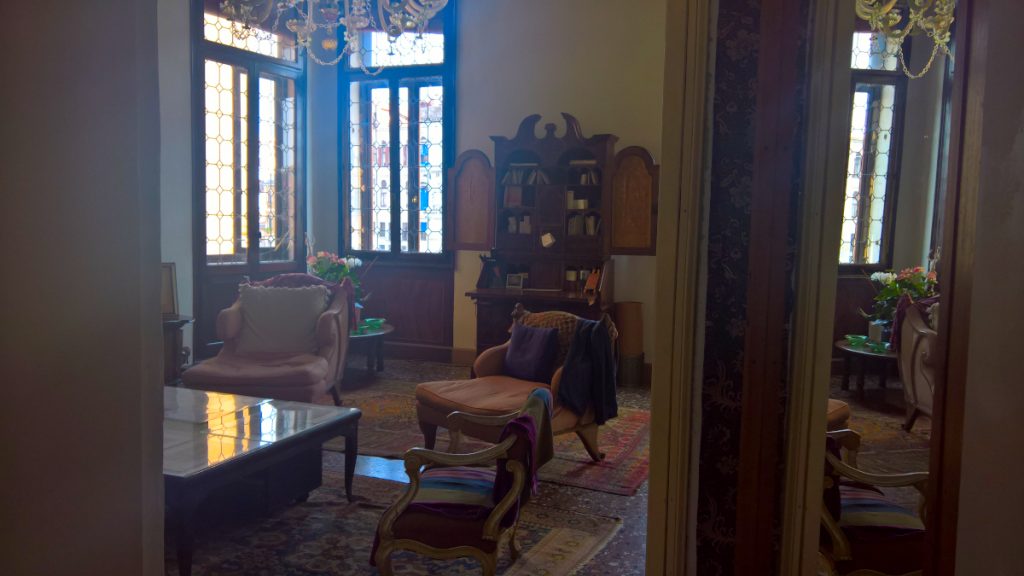
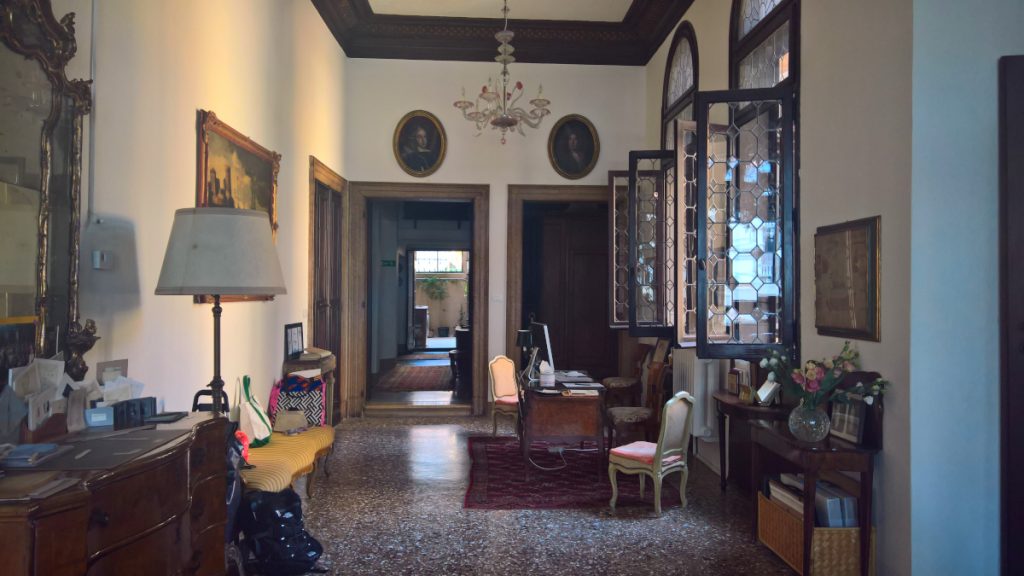
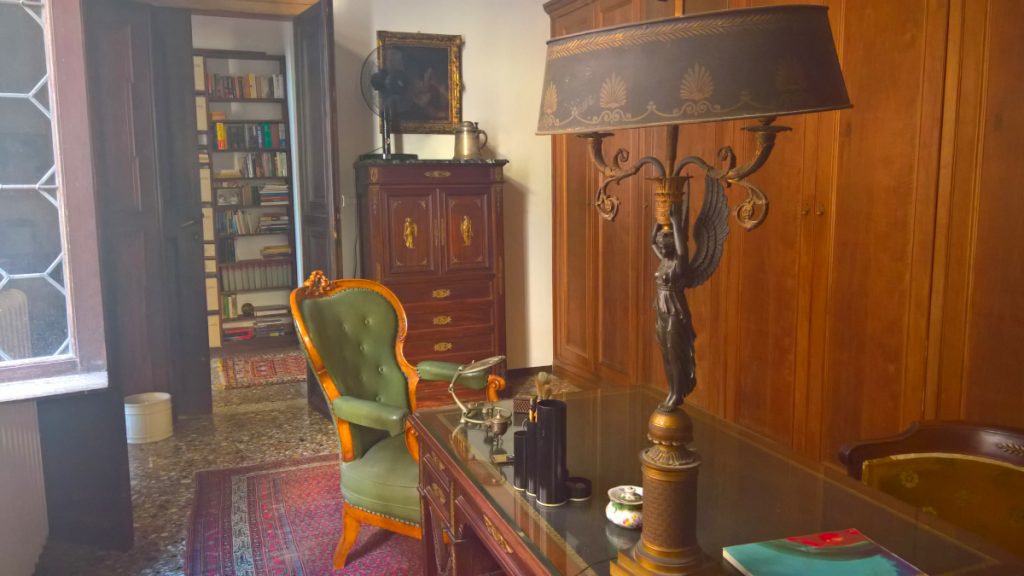
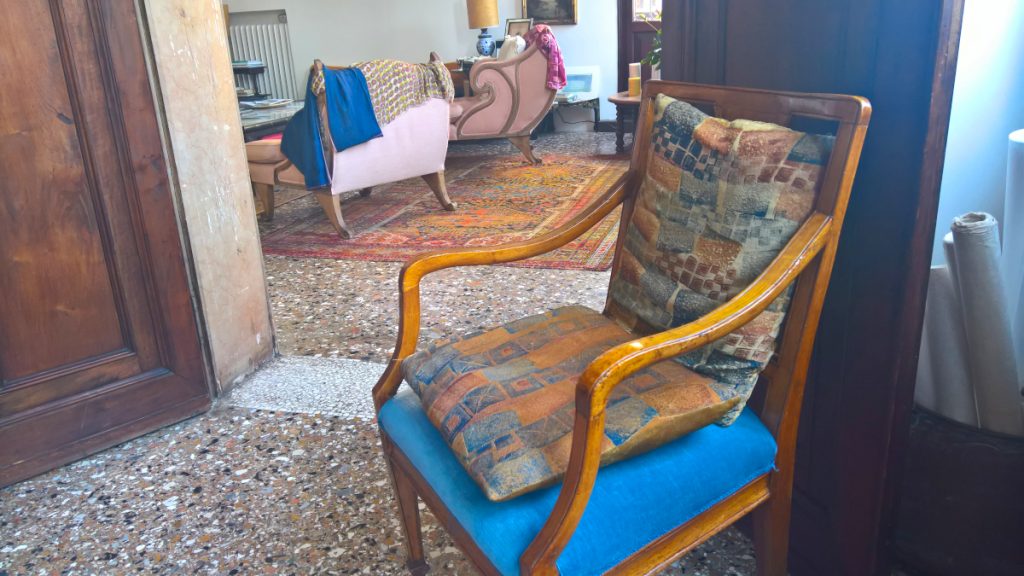
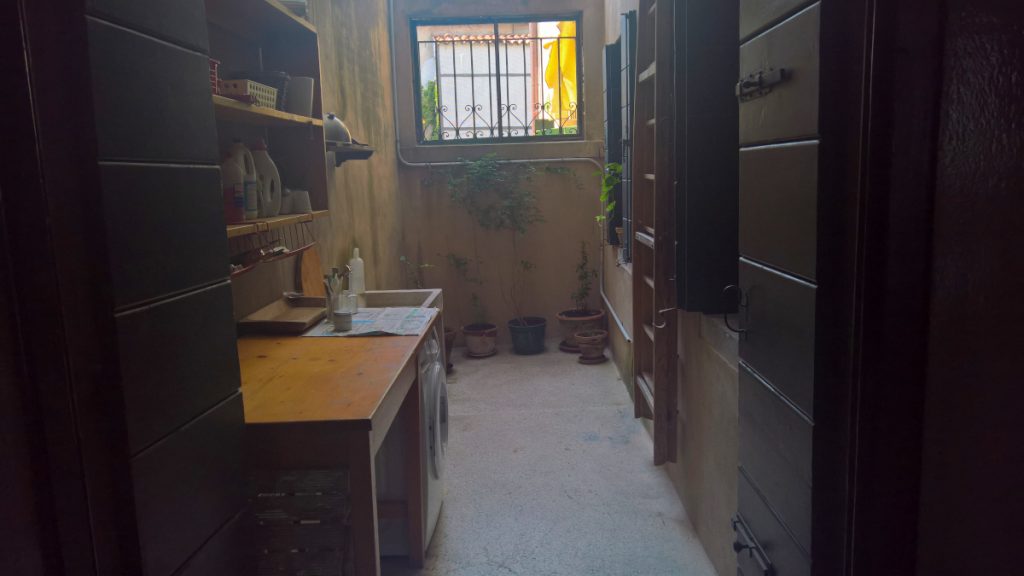
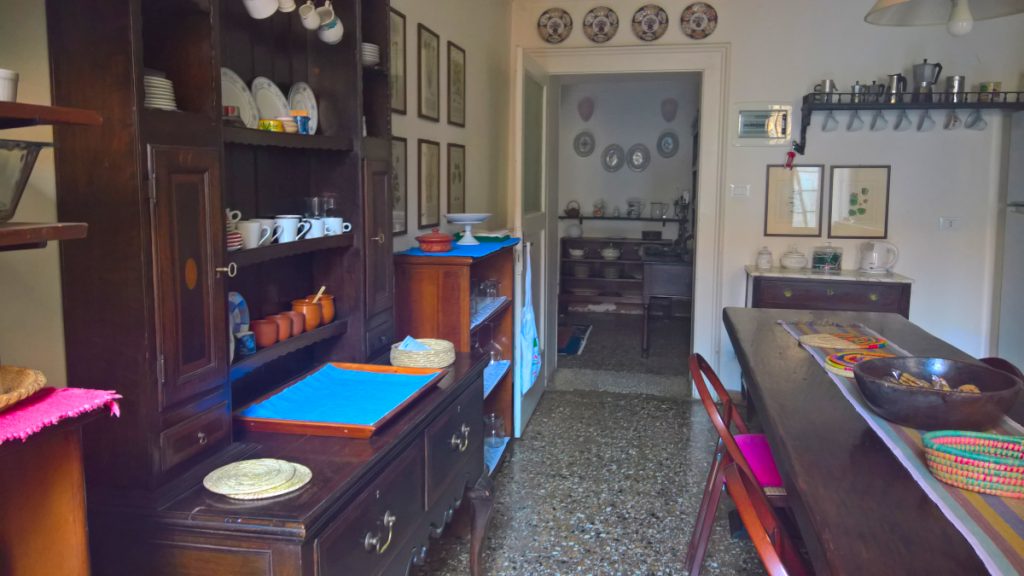
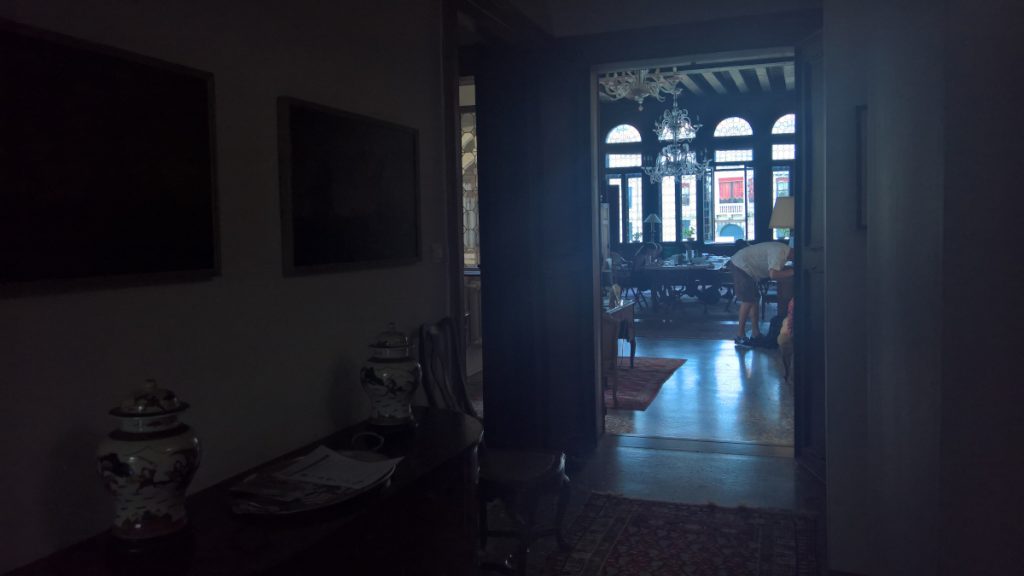
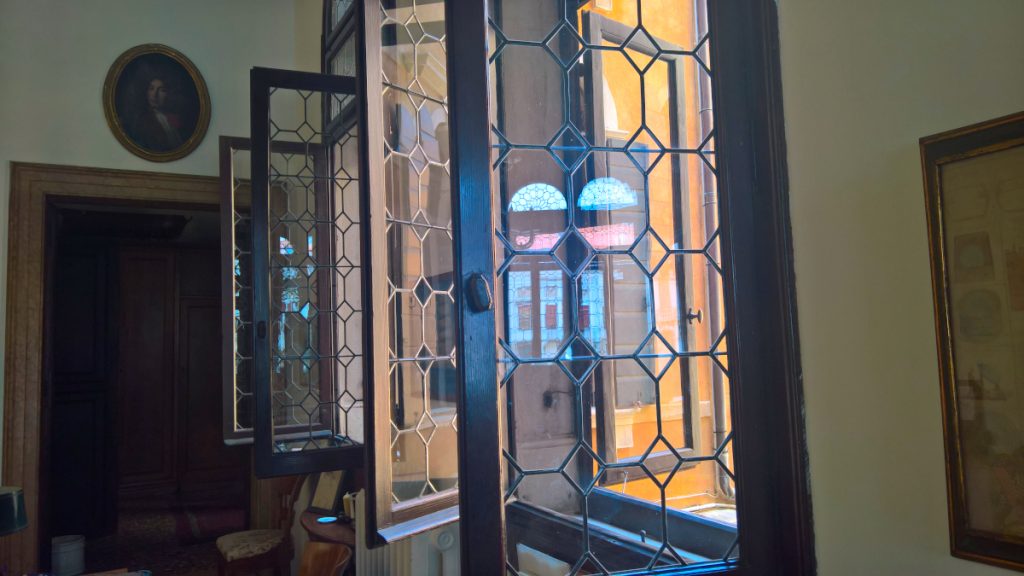
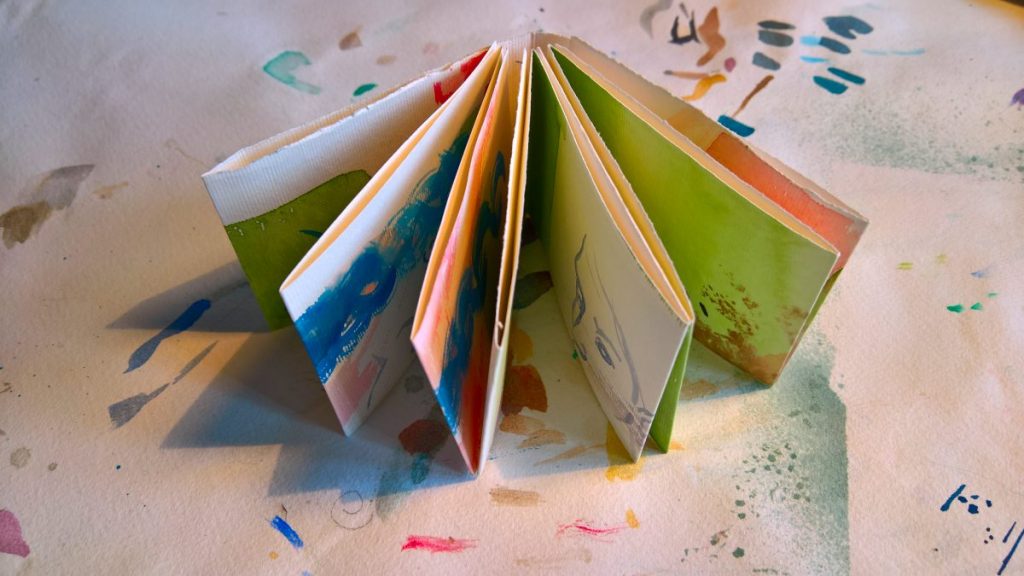
This Autumn the college has raked through the anti-Covid measures and settled on a small, regular course of water colour workshops that can utilise the huge dining table and generous proportions of the room. One of the aspects of how the medium is taught here is to work small and produce something that almost instantly turns into a finished piece of work rather than a page that languishes in an art folder or years hoping to be put on the wall. This is done by folding the paper into mini booklets and it works a charm. Further fear of sullying the blank page is removed by drawing arbitrary frames within which to articulate your observations, putting down invisible white wax marks to randomise the image or using a brush much larger than you ever might consider to be reasonable.
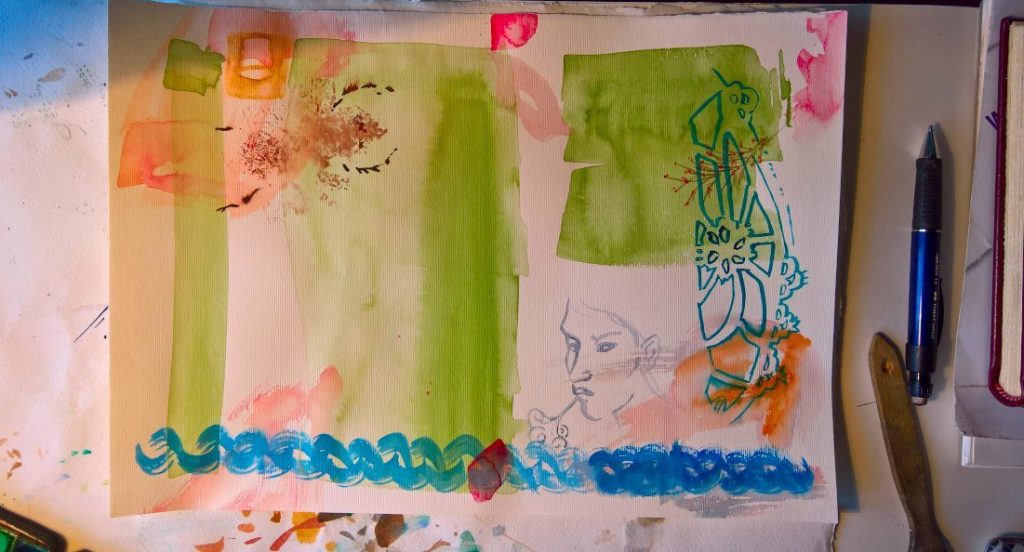
The four or five students who take part in the workshop are starting to form a bond and the college fosters a creative process whereby we observe and discuss one another’s work. This is not theatre or a concert performance or even a film set. Painting is a notoriously solitary activity for most people. Today however, the ever delightful course leader, Matilde, proposes a truly collaborative art process. Each of us will take our sheet of (roughly) A3 paper and make some sort of watercolour mark. It can be anything of our choosing but something that we can repeat. In fact the breadth of mark making is the first thing that delights. I go for broad, slightly random washes. My neighbour swirls exquisite colours around whilst hers paints faces and forms. There is a delicate lace doily shape and a frieze of bright blue. Matilde herself brings out the sponge and produces a sort of insect form that travels to different places on each page. Why ‘each’ page because, yes, after we finish our contribution, much like the children’s game, Head, Body and Legs, we pass the sheet of paper onto the next person.
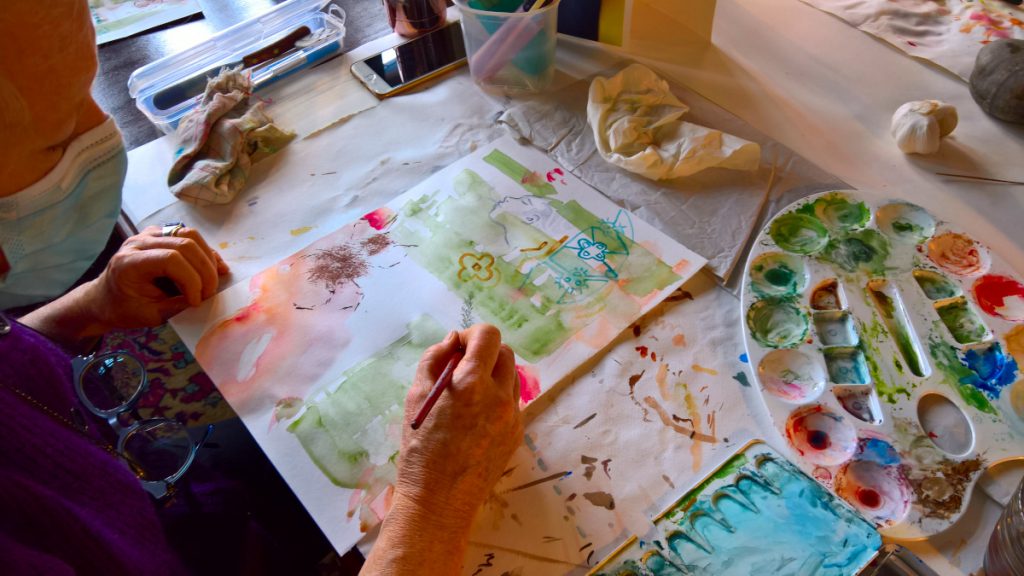
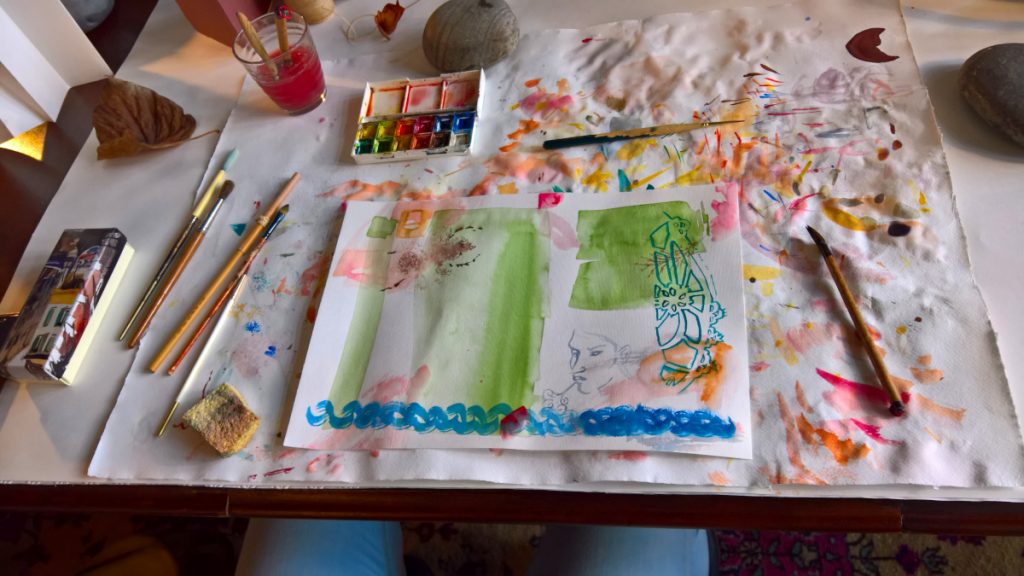
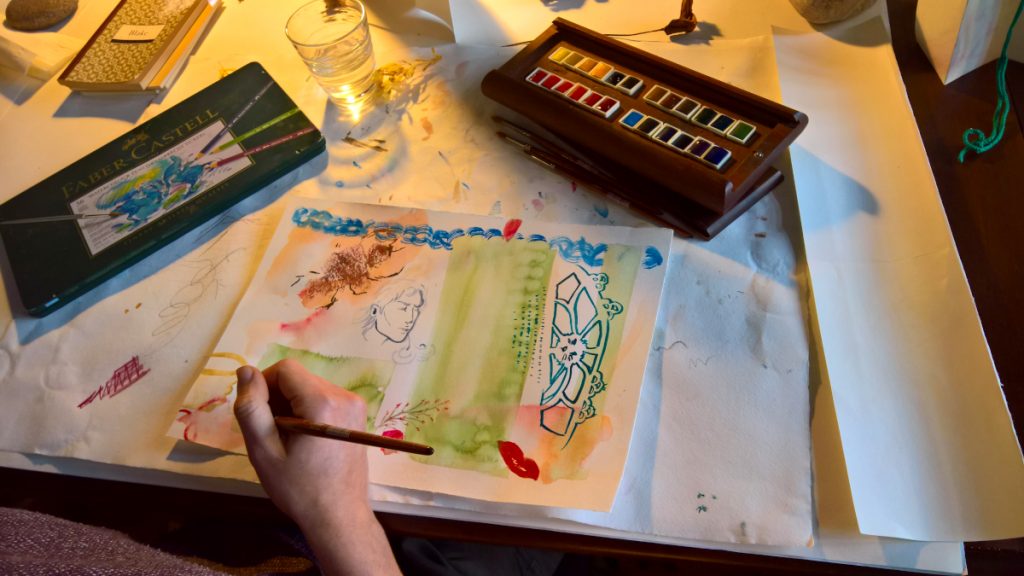
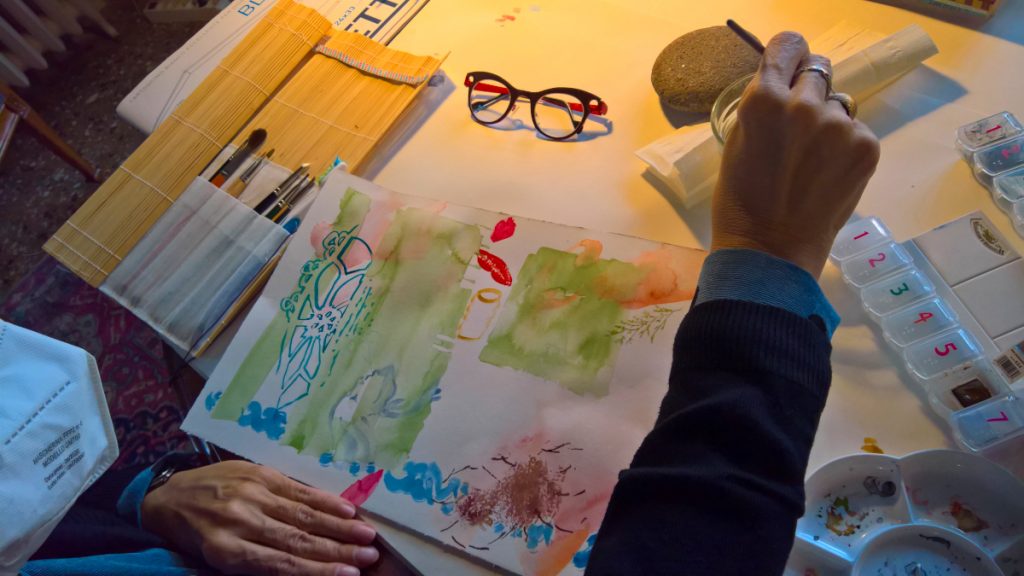
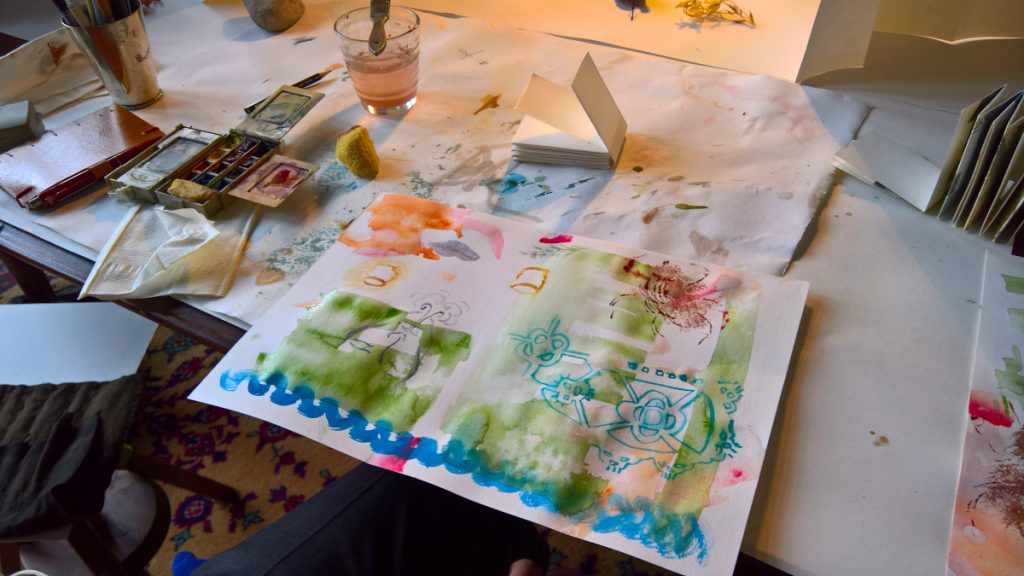
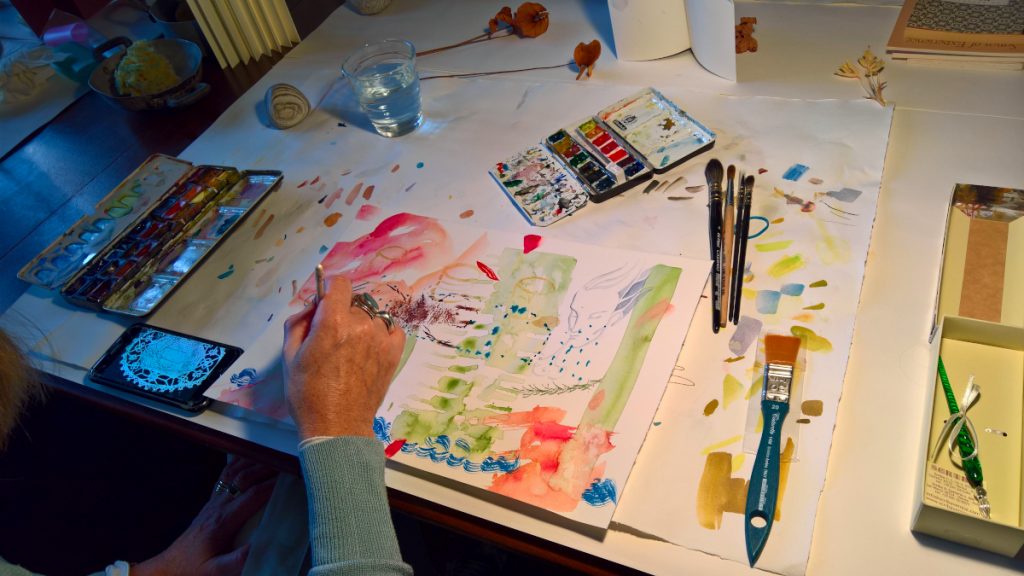
Doing the same thing over and over isn’t something I find particularly easy. I like the problem solving part of creativity mainly because it is nearly always unique and original each time. But there is a rhythm to this. As long as we can keep moving. I soon find another characteristic of my personality coming to the fore as I time each rotation and announce the handover with a vocal bell ring. One person finds this difficult which nearly causes the whole project to break down but I secretly make the interludes a bit longer and the faster ones amongst us seem to all have learned a degree of patience along the way. In fact everyone really embraces the need for speed rather than perfection and the mark making takes on delightful random moments such as the sheets getting turned upside down without knowing or splashes of paint adding to the overall effect.
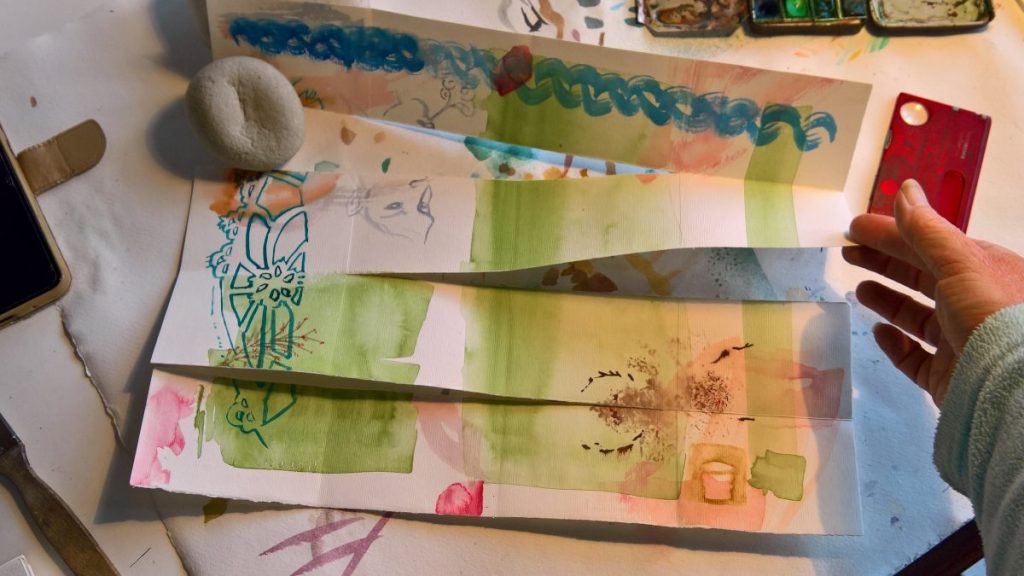
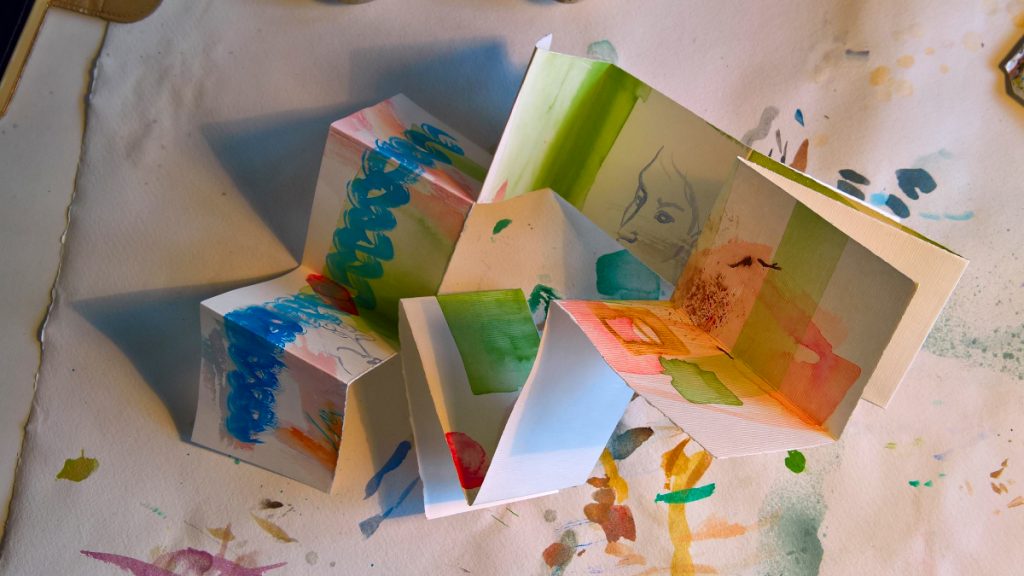
When we have our original work back in front of us, we start a process of folding the paper and making three cuts which mean that each one can be folded up into an instant book. There is some debate about how to create a cover out of the final two folds and individuality springs forth again as different people do different things. In fact the beauty of this exercise is that every work follows the same form with a very similar palette of colours but no one work is the same as another. I truly love this endeavour. It makes me smile broadly behind my mask. It wouldn’t be possible to do it any other way than together.